Skip to content
Nocedo de Ribeira

Nocedode Ribeira

Some places only exist while someone still says their name.Scroll slowly: you are about to cross almost a thousand years.

San Cibrao de Nocedo · Os Blancos · Ourense, Galicia

The river of forgetting

The Romans were afraid of forgetting. So are we.

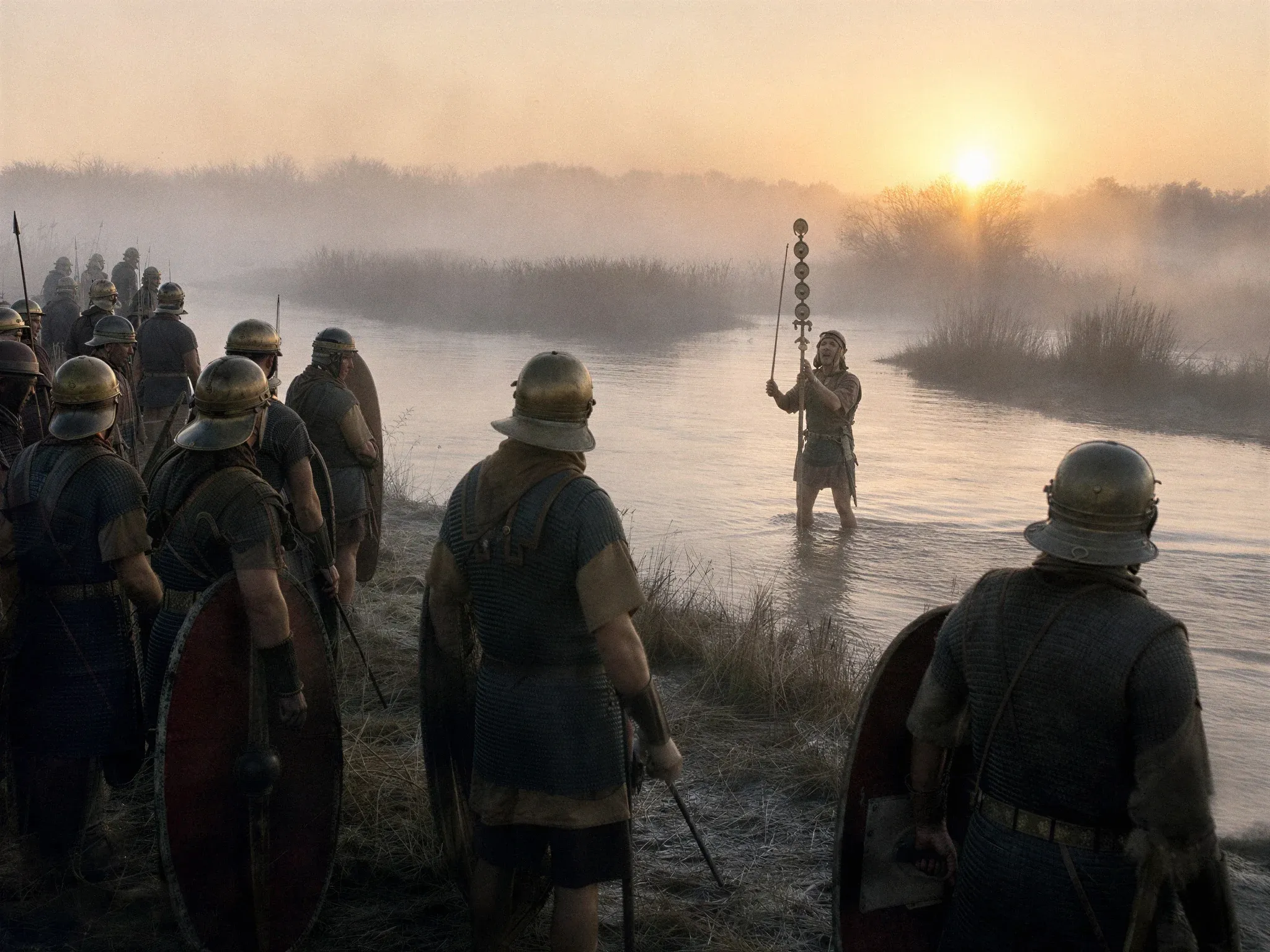
Recreation: Roman legionaries at a misty river at dawn; their general already stands in the water with the standard
What Livy wrote · AI recreation

When the legions of Decimus Junius Brutus reached the river Limia, eight kilometres from here, the soldiers refused to cross. They believed it was the Lethe: the river that wipes the memory of anyone who crosses it.

They had come to fight the Gallaeci, the people who lived in hillforts like the one on the Outeiro de Almeide. In Os Blancos, it seems, the statue of a Gallaecian warrior like them was found: only its granite legs remain. But first they had to cross the river.

Brutus snatched the standard from its bearer and crossed first. The others followed. Tradition adds that, from the far bank, he called each soldier by name.

This page does the same: it crosses the river with the documents in hand, and says the names.

Livio · s. I a. C.

What Livy wrote

The oldest surviving account of the crossing of the river of Oblivion.

What Livy wrote

«…cum flumen Oblivionem transire nollent, raptum signifero signum ipse transtulit et sic, ut transgrederentur, persuasit.»

"…when they refused to cross the river of Oblivion, he snatched the standard from the standard-bearer, carried it across himself, and so persuaded them to follow."

Before paper

We don't know their names. We know they looked out over this same valley.

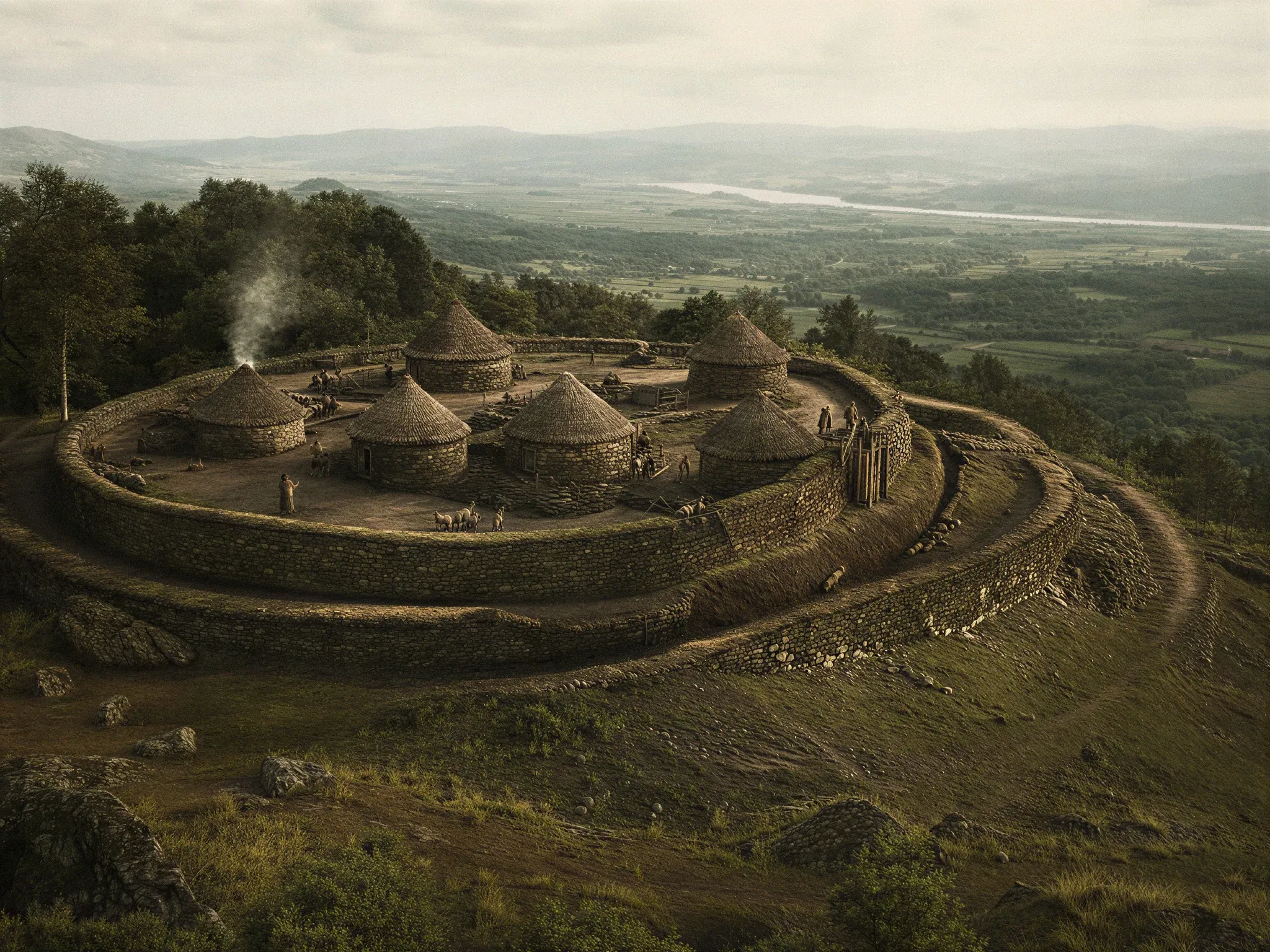
This is where it stood: on the hill, 1.2 km from Nocedo. Real 3D terrain. Terrain: Mapzen · AWS Terrain Tiles · © OpenMapTiles · © OpenStreetMap
3D reconstruction of the Outeiro de Almeide hillfort at night: a wall around the summit, round thatched houses and fires

Reconstruction: how it may have looked

On the Outeiro de Almeide, within the parish, stood a castro: a fortified Iron Age village. Archaeologists located it in 1991 and collected Roman roof tiles and pottery. People already lived here when Rome arrived.

That stone warrior from the river chapter is kept today, according to a heritage blog, at the Archaeological Museum of Ourense. Whether it came from this hillfort or another is still to be confirmed.

1991

The Outeiro de Almeide hillfort

Two enclosures; the upper one elliptical, defended by a rampart and a ditch. Common Roman pottery and fragments of roof tile were found.

The Outeiro de Almeide hillfort

«Asentamento castrexo situado no lugar de Nocedo, parroquia de San Cibrao de Nocedo (Os Blancos).»

Unconfirmed

The stone warrior

The granite legs of a Gallaecian warrior statue. A heritage blog photographed them at the Archaeological Museum of Ourense with the caption «Os Blancos». The museum has not yet confirmed where they came from or their inventory number: for now it is a lead, not proof.

The stone warrior

«Pernas de guerreiro galaico (Os Blancos).»

Source Blog «O Noso Patrimonio» · Castros de Galiza II (xullo de 2011), entrada «Outeiro de Almeide»

Cita breve con enlace (blog sen licenza aberta)

Idade Media

The As Airas tomb

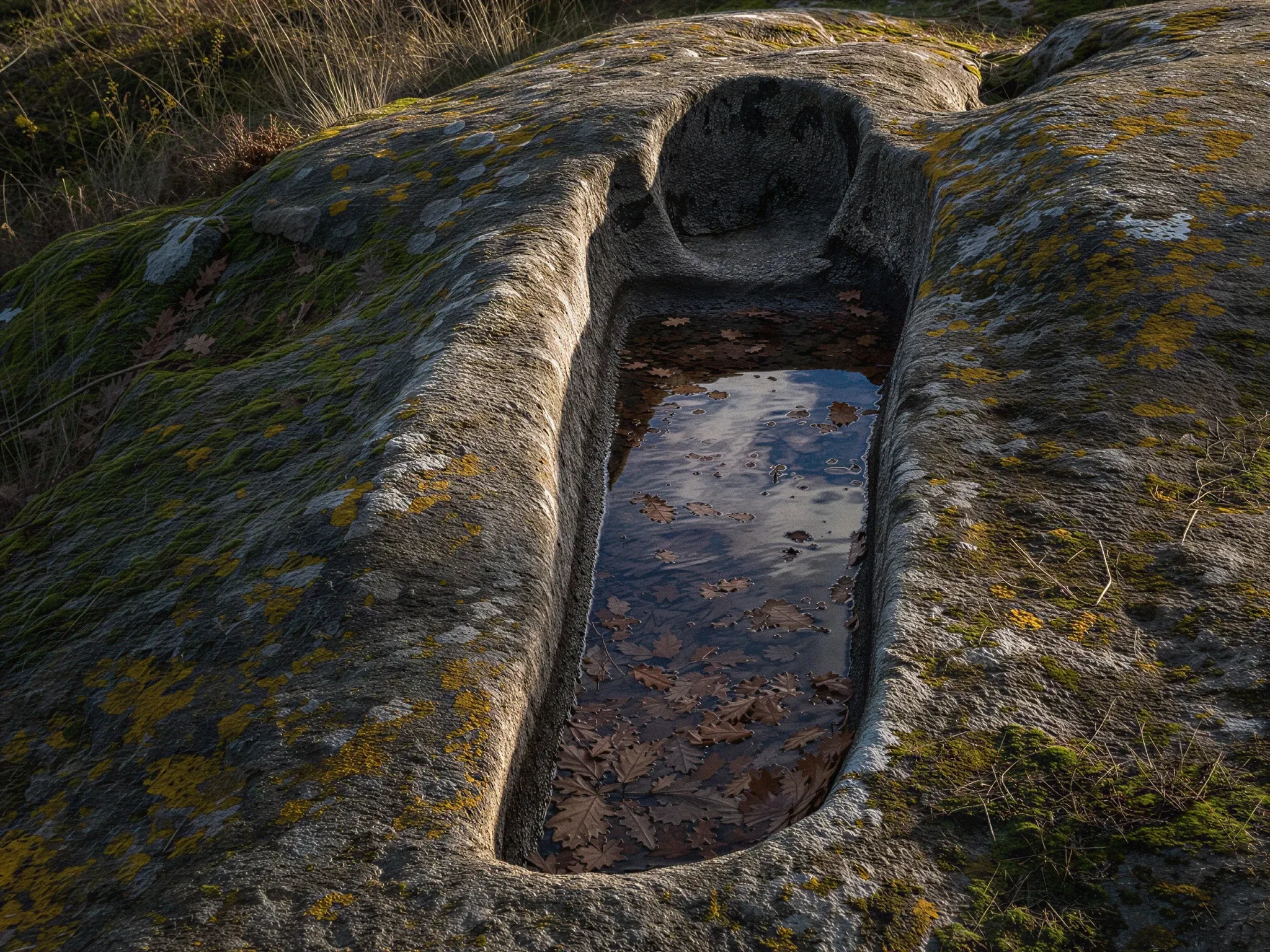
Another Xunta record lists a medieval burial in the hamlet of Nocedo. It is carved into the rock in the shape of a body: 1.75 m long, 54 cm wide at the middle, head to the north.

The As Airas tomb

«Sepulcro medieval situado no lugar de Nocedo, parroquia de San Cibrao de Nocedo (Os Blancos).»

3D reconstruction of the As Airas tomb: a line of fire draws the body-shaped grave in the rock and its measurements

Reconstruction with the real measurements

Legend · oral memory

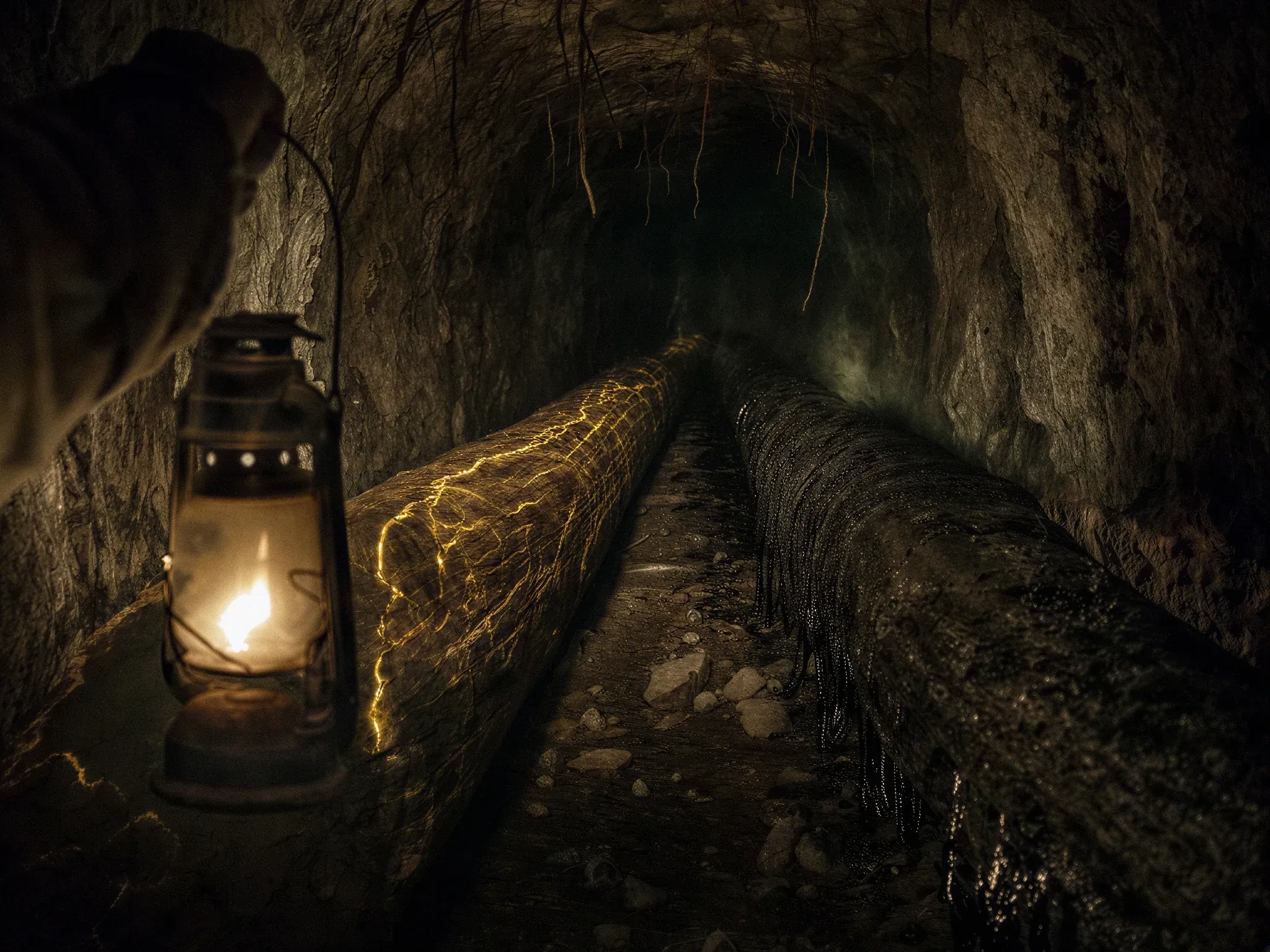
The legend of the beams

They say two giant beams run beneath the village: one of pure gold, the other of plague. Whoever dared to look for them might find a fortune… or the plague. It is the "beam of gold" legend told all over Galicia; elsewhere, the second beam is made of tar.
The legend of the beams

«Hai unha mina dos mouros que vai desde Nocedo ata Valdarca. [...] O home dixo que non dera co ouro, pero que atopara chourizos e "de todo".»

The first written record

Nine hundred and eighty-three years ago, someone dipped a quill and wrote "noceto". As far as we know, no one had written it before.

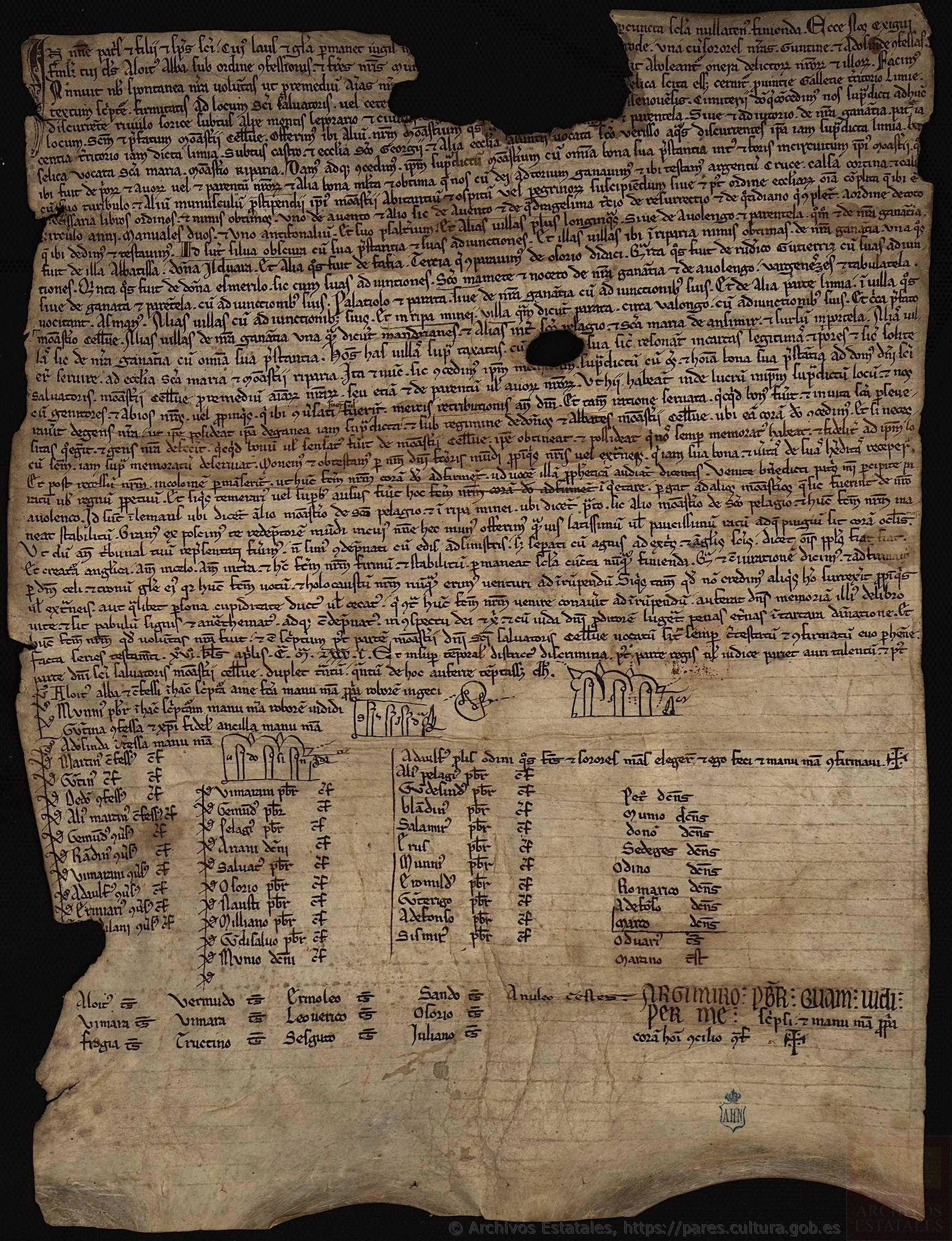
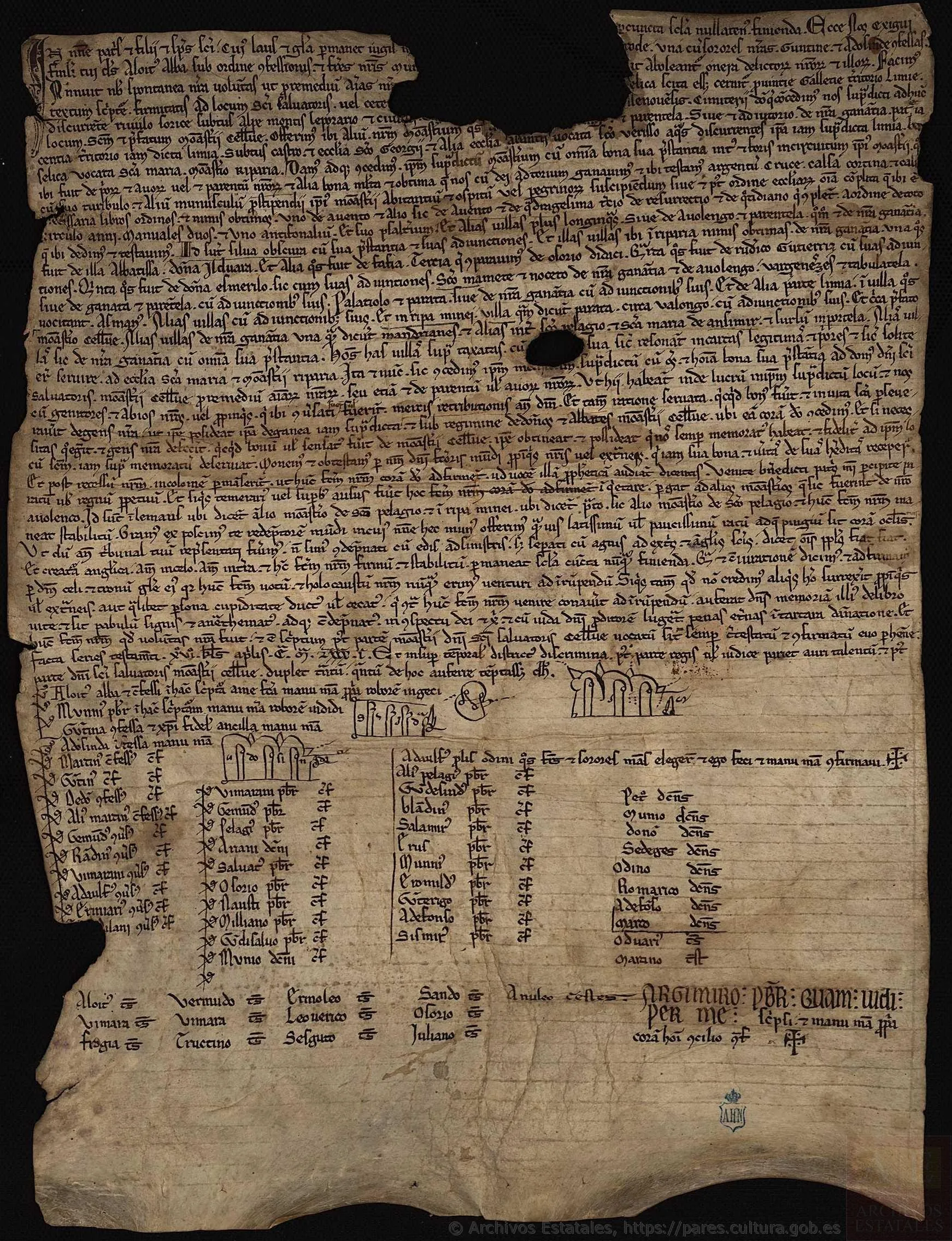
  1. National Historical Archive, Madrid. A 453 × 340 mm skin written 983 years ago.
  2. Hundreds of words in Visigothic script. A list of lands, churches and villages.
  3. And here, among them all: "noceto".

since someone first wrote Nocedo down

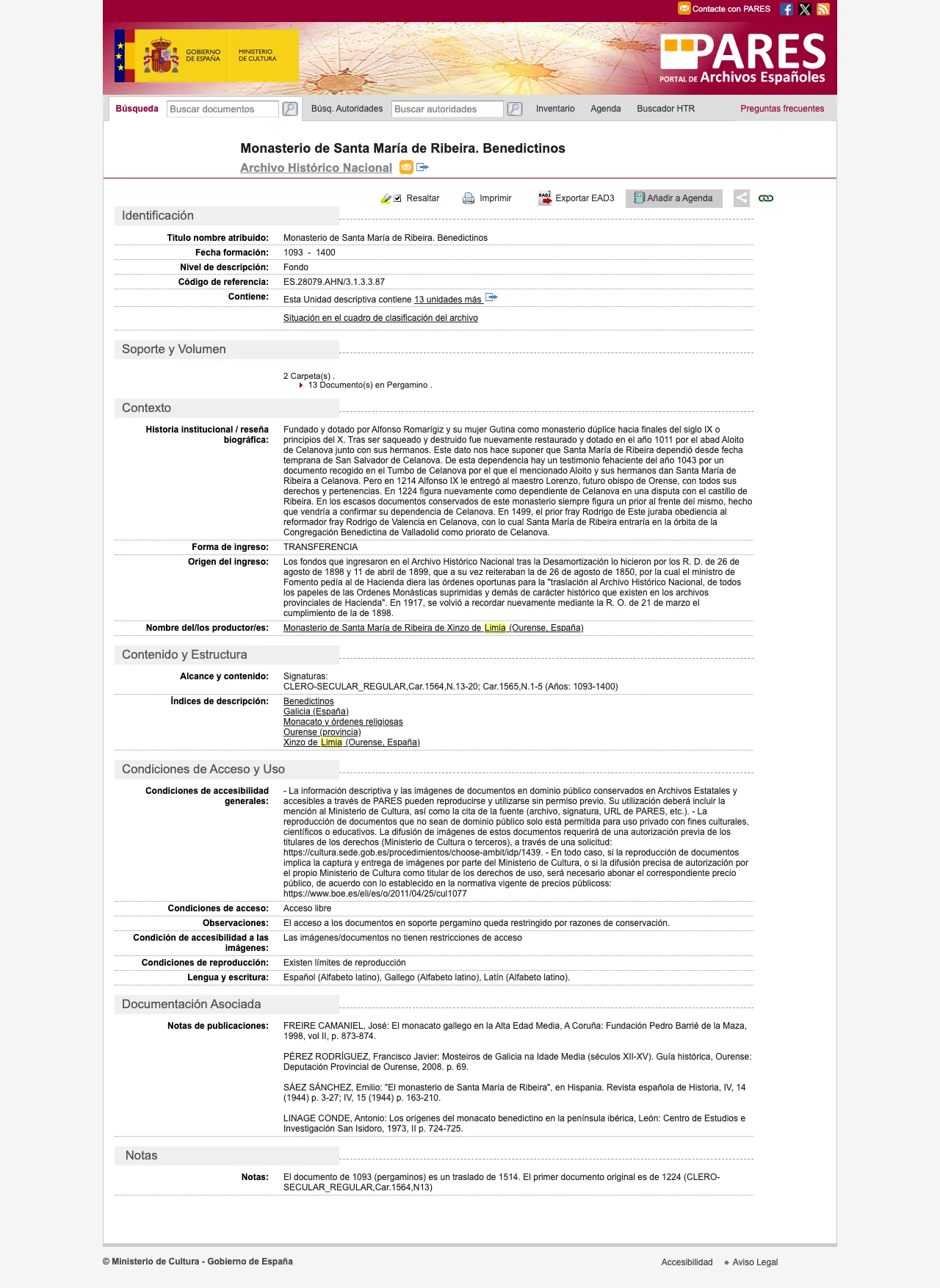
Abbot Alvito of Celanova and his siblings handed the monastery a long list of family properties. On that parchment, now kept at the National Historical Archive in Madrid, is the oldest known mention of the village: "noceto".

Noceto comes from the Latin nucetum: "place of walnut trees".

1043

The Celanova parchment

A 453 × 340 mm skin written in Visigothic script. At the foot, the signatures of Alvito, his sister Gutina and dozens of witnesses.

The Celanova parchment

«Facta series testamenti XVI kalendas aprilis, Era MLXXXI»

This deed made on 17 March in the year 1043.

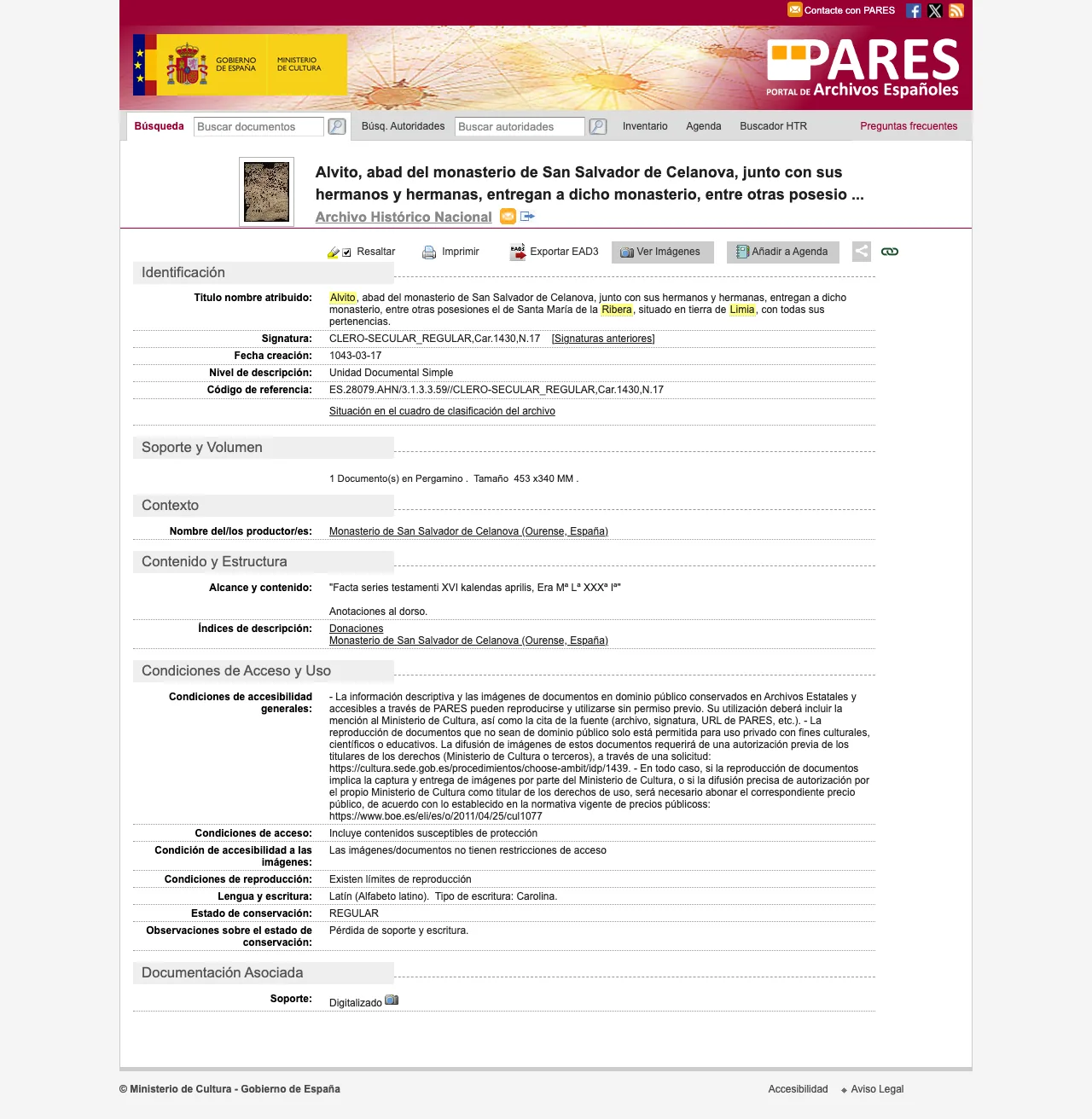
Source Archivo Histórico Nacional · Ministerio de Cultura · PARES

CLERO-SECULAR_REGULAR, Car.1430, N.17

Public domain · free to reproduce, citing archive, reference and PARES

Open in the archive
Handwritten line reading "noceto"

1043

There it is: "noceto"

In the list of family holdings, San Mamede and Nocedo appear together.

There it is: "noceto"

Sancto Mamete et noceto de nostra ganantia et de avolengo

San Mamede and Nocedo, from what we earned and what we inherited

Source Archivo Histórico Nacional · Ministerio de Cultura · PARES

CLERO-SECULAR_REGULAR, Car.1430, N.17

Public domain · free to reproduce, citing archive, reference and PARES

Open in the archive
Handwritten line reading "monasterio Riparia"

1043

And "de Ribeira"

A few lines above, the monastery of Santa María de Ribeira, six kilometres from Nocedo (today Mosteiro de Ribeira, Xinzo de Limia). Both names share the same document: the papers' explanation for the village's surname.

And "de Ribeira"

…vocata Sancta Maria, monasterio Riparia

…called Santa María, monastery of Ribeira

Source Archivo Histórico Nacional · Ministerio de Cultura · PARES

CLERO-SECULAR_REGULAR, Car.1430, N.17

Public domain · free to reproduce, citing archive, reference and PARES

Open in the archive

s. IX-1499

The monastery of Ribeira

Founded in the late 9th or early 10th century by Alfonso Romarígiz and his wife Gutina. Sacked, then restored in 1011 by Abbot Aloito; a priory of Celanova from 1043. Thirteen of its parchments survive (1093-1400).

The monastery of Ribeira

Source Archivo Histórico Nacional · Ministerio de Cultura · PARES · Monasterio de Santa María de Ribeira

CLERO-SECULAR_REGULAR, Car.1564, N.13-20; Car.1565, N.1-5

Public domain · free to reproduce, citing archive, reference and PARES

Open in the archive
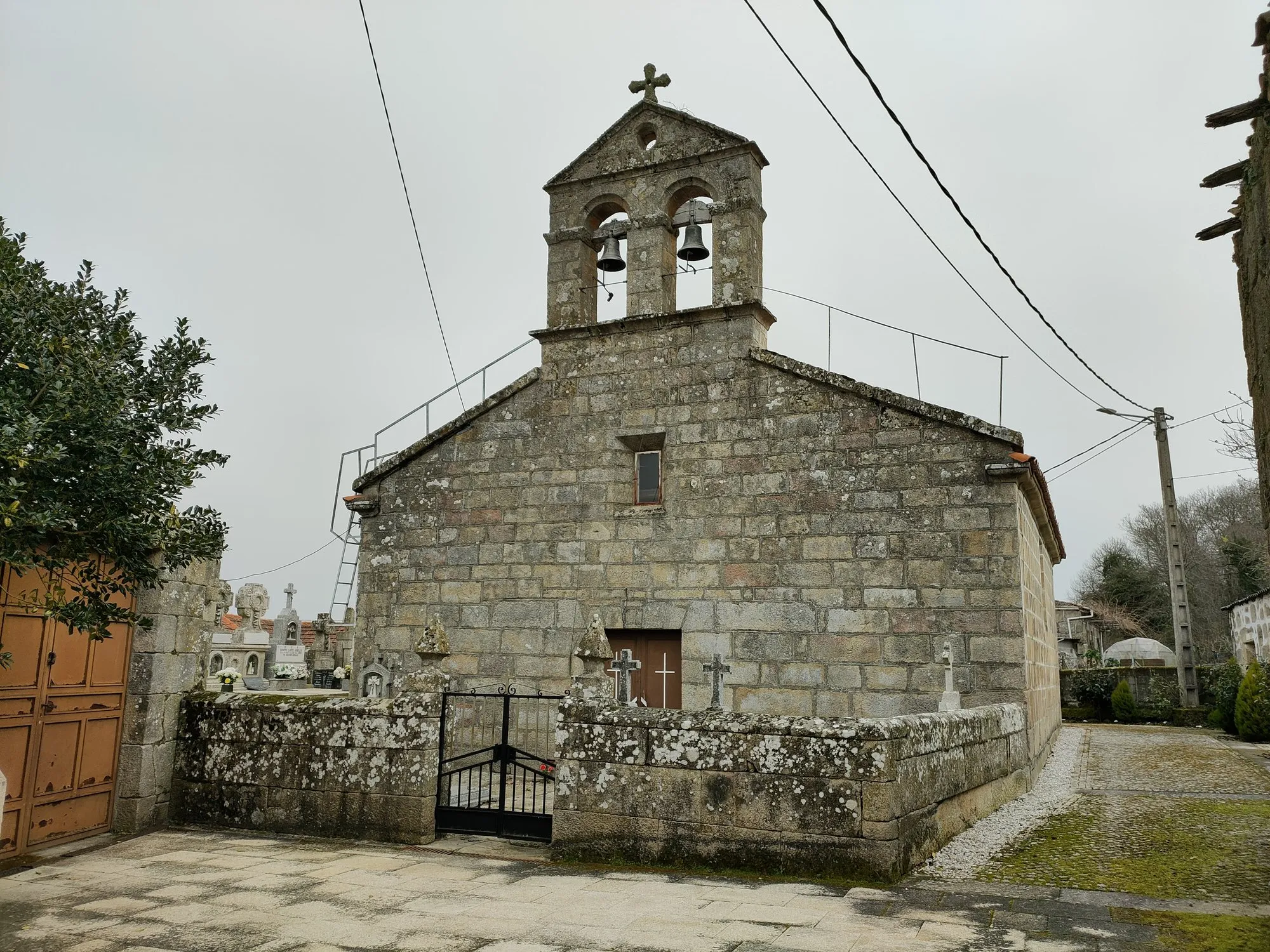
The parish church of Mosteiro de Ribeira today: granite stone, a bell gable with two bells and the churchyard, on a grey day
Chairego apc · CC BY-SA 4.0 · Wikimedia Commons

The church of San Cibrao

Hands no one remembers carved these stones. Eight centuries later, they are still here.

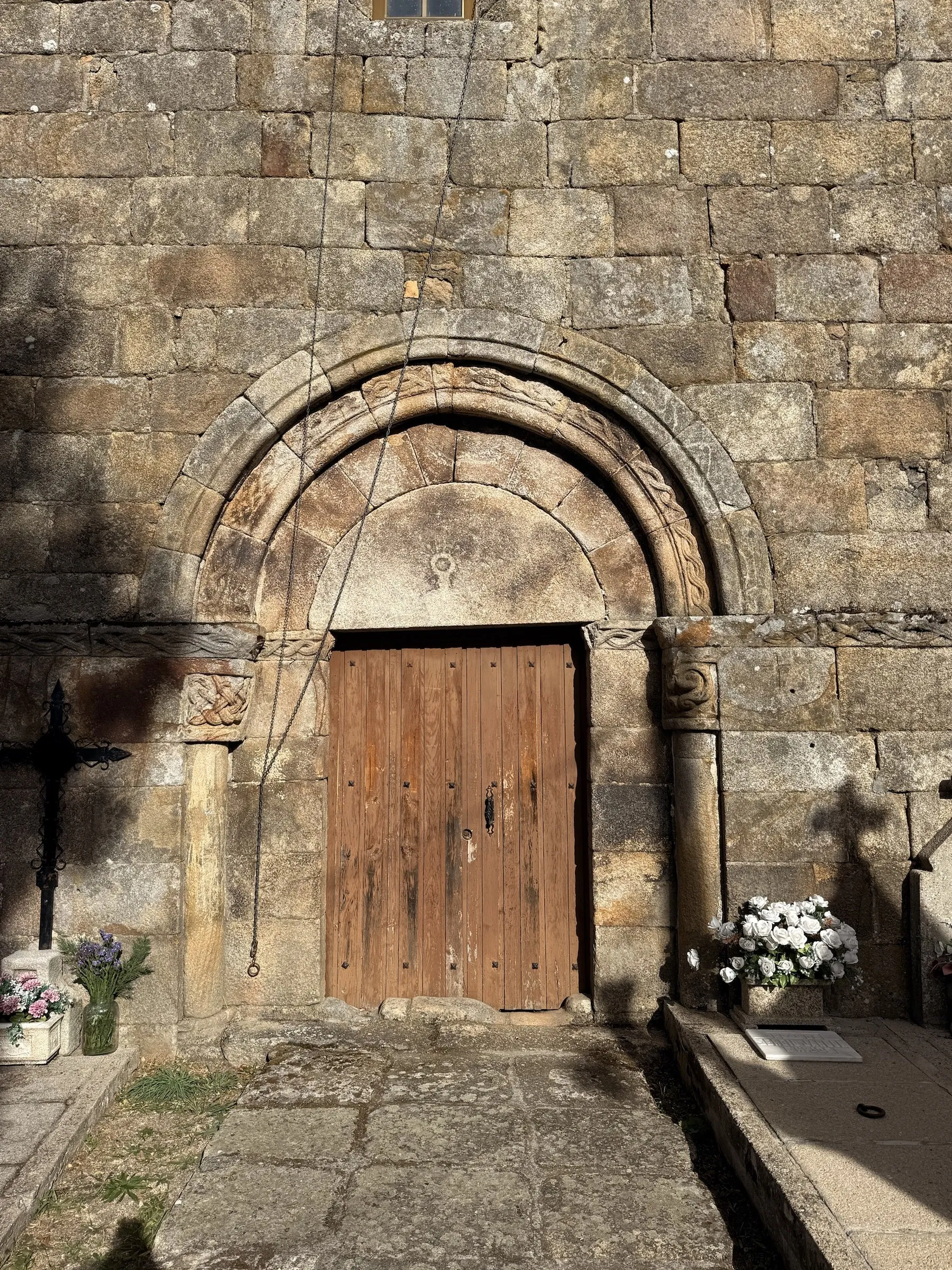
West doorway of San Cibrao church, with round arch and carved capitals

the church of San Cibrao has stood

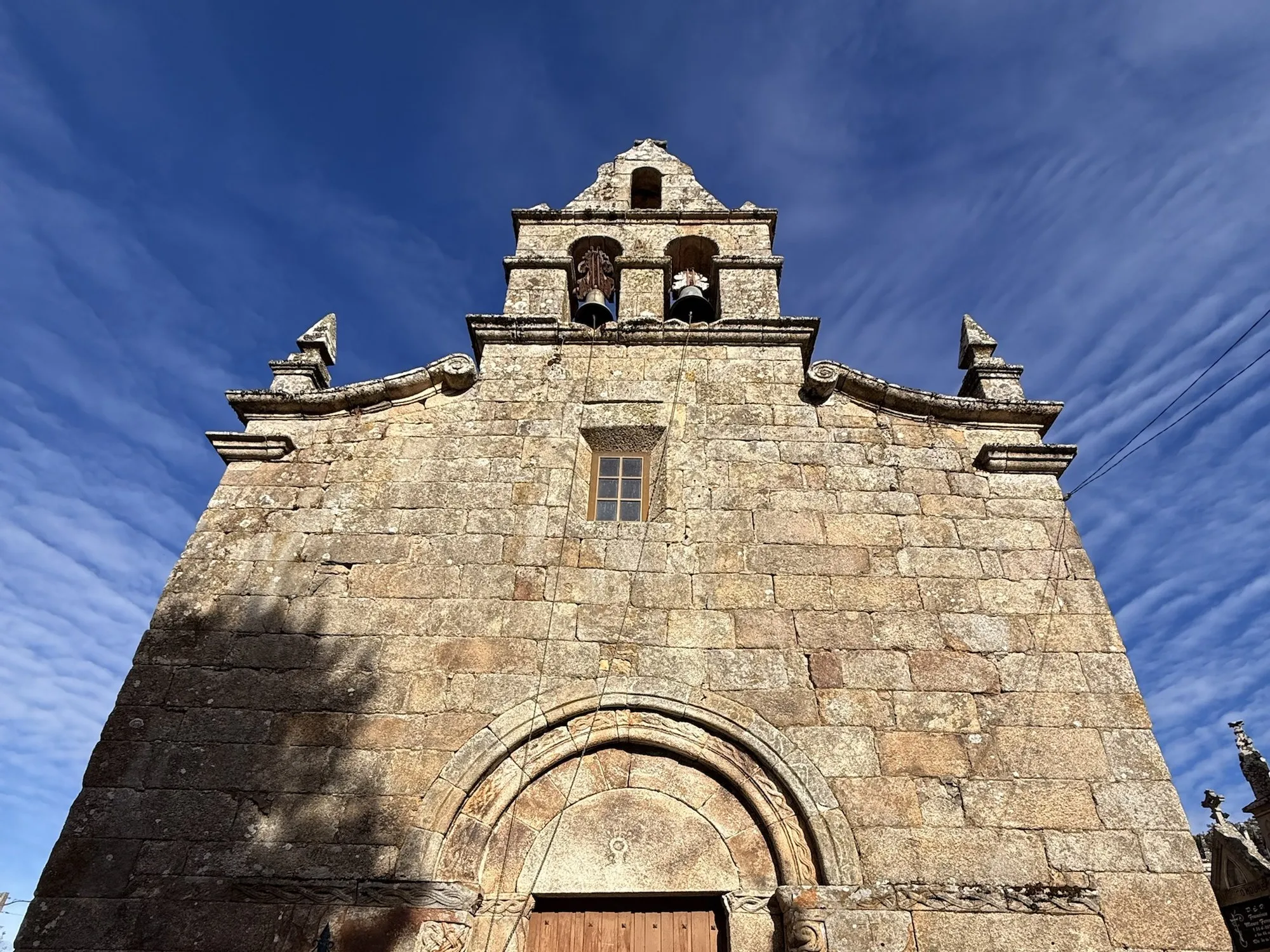
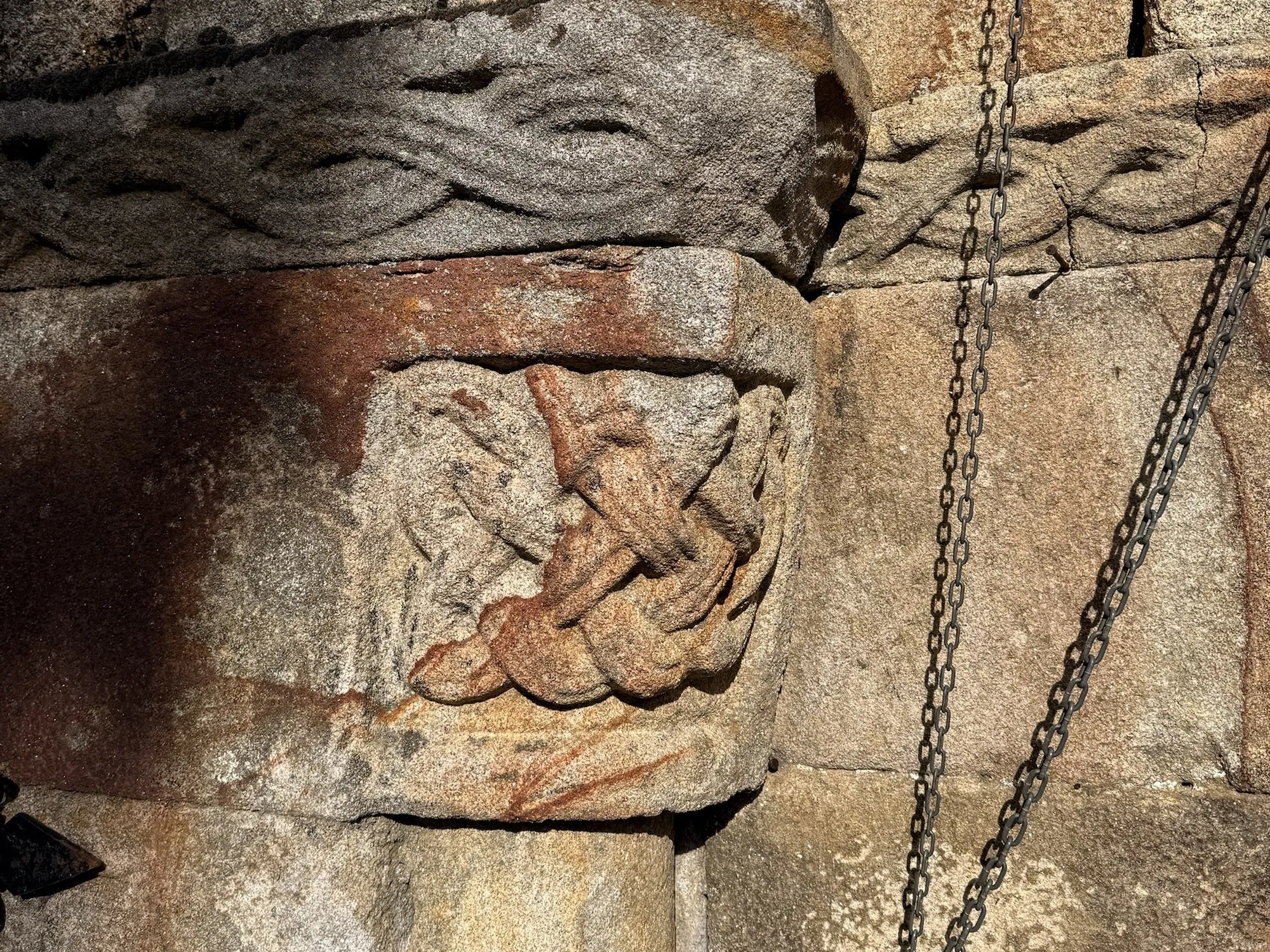
In the 1210s-1220s the Romanesque church that still stands was built: rectangular nave and apse, a doorway carved with interlace, and a triumphal arch full of leaves, stems and four-petalled flowers.

c. 1220

Eight hundred years of stone

The Baroque bell gable and the sacristy were added centuries later.

Eight hundred years of stone

c. 1220

Learned from Oseira

The capitals reinterpret motifs from the great monastery of Oseira, carved more roughly and deeply.

Learned from Oseira

«…reinterpretación de elementos plasmados en Oseira y que toman en esta ocasión un carácter rudo con talla profunda y sin demasiado detalle.»

c. 1220

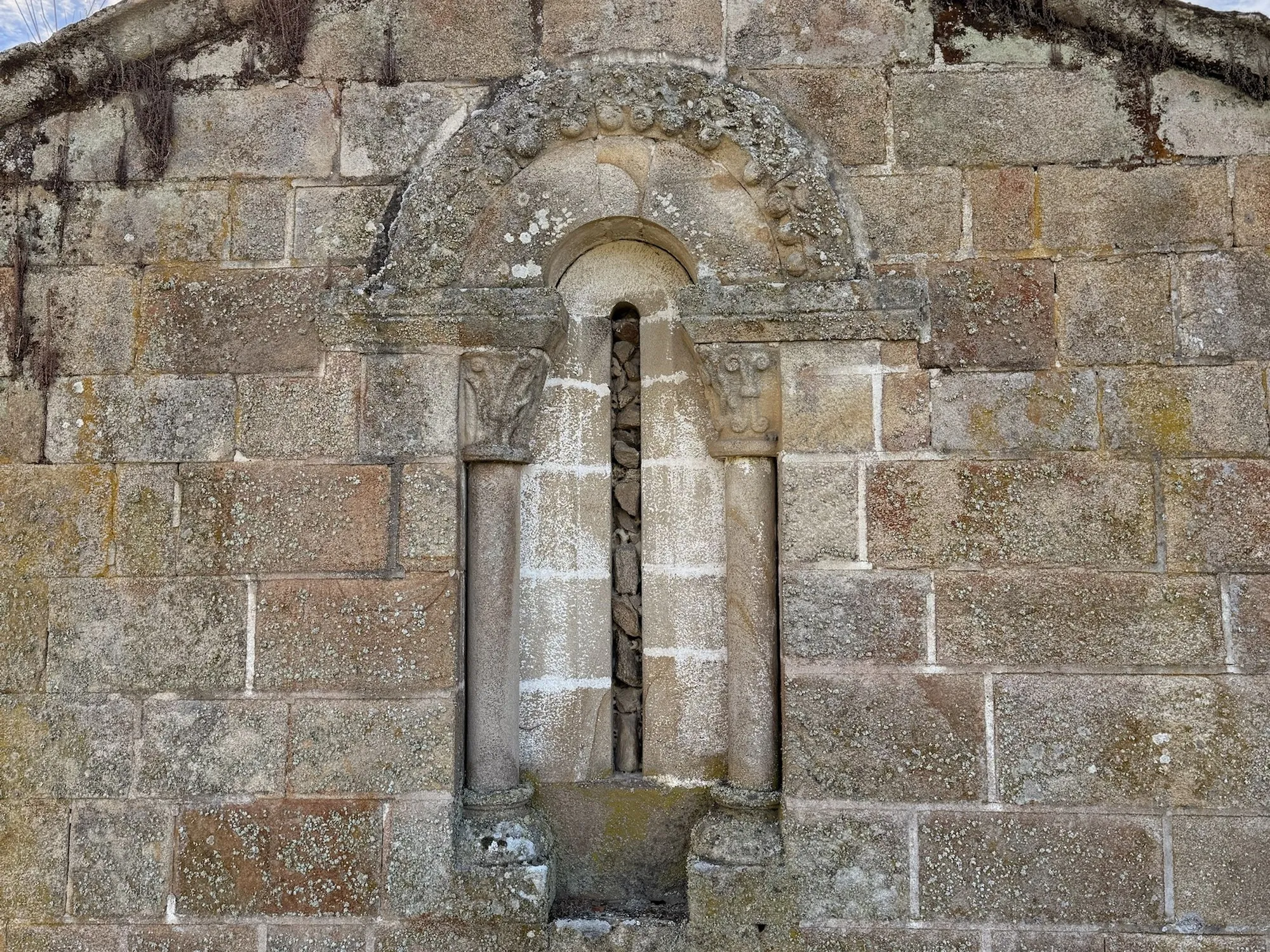
The blocked window

In the apse, a window decorated with balls and zigzags was blocked when the altarpiece went in. Inside are the carved deacons Vincent and Stephen, by Francisco de Moure.

The blocked window

The first names

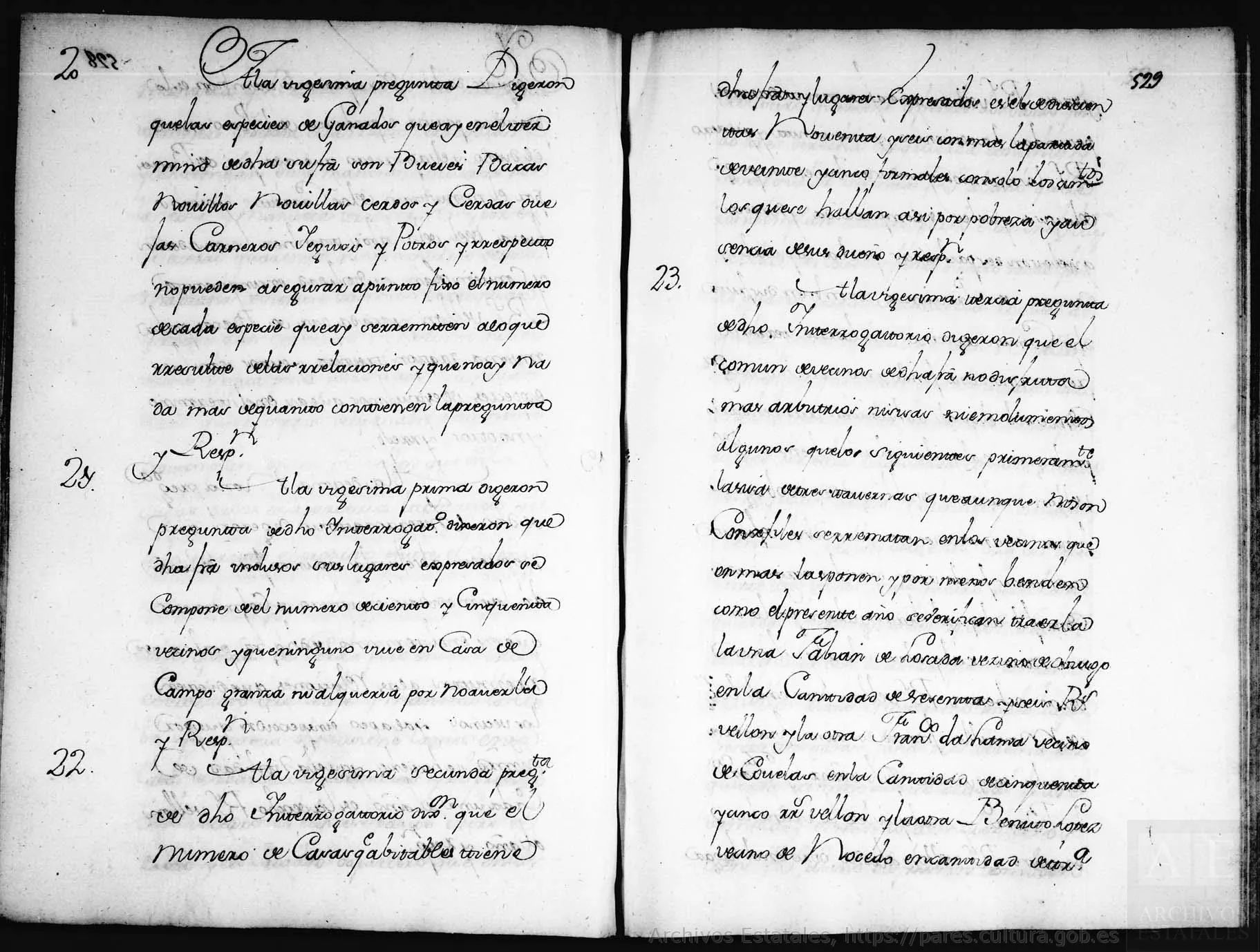
For the first time, the people of Nocedo have names. Lorenzo measured the land. Benito ran the tavern. And there were two ovens where everyone's bread was baked.

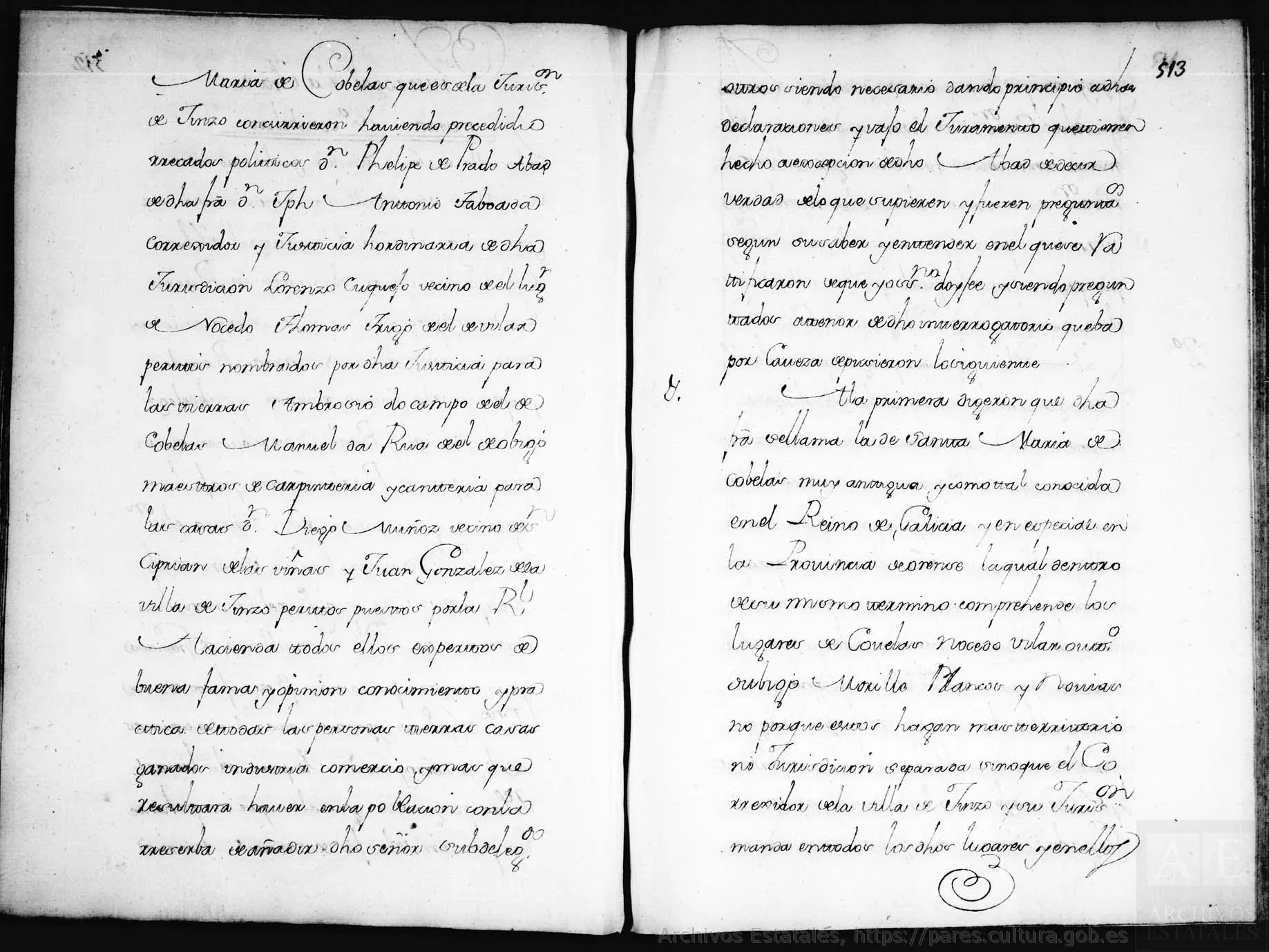
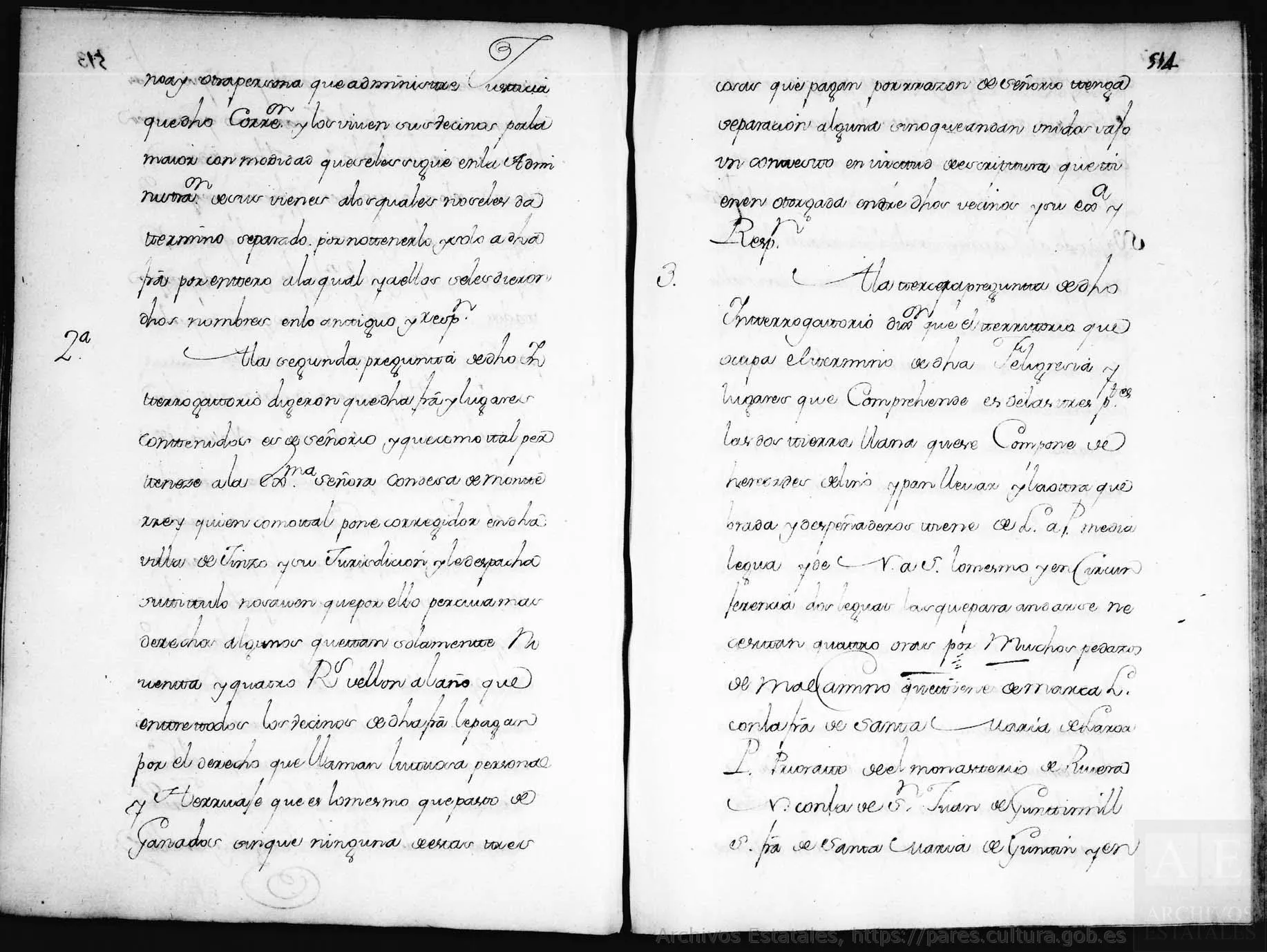
Two handwritten pages from the 1752 Ensenada census
Seven hamlets, one parish · Archivo General de Simancas · Catastro de Ensenada, Respuestas Generales · Ministerio de Cultura · PARES

the neighbours answered before a notary

In 1752 the king ordered everything to be counted: land, houses, livestock and trades. Residents answered 40 questions before a notary. The 30 folios of their answer are kept at the General Archive of Simancas, and in them Nocedo already has people with names.

1752

Seven hamlets, one parish

Nocedo was one of seven hamlets in the parish of Santa María de Covelas. Together they counted 150 households and 190 habitable houses.

Seven hamlets, one parish

«…comprehende los lugares de Covelas, Nocedo, Vilarouto, Oubigo, Morillo, Blancos y Novias…»

Source Archivo General de Simancas · Catastro de Ensenada, Respuestas Generales · Ministerio de Cultura · PARES

AGS, CE, RG, Libro 222, folios 511-540 (Santa María de Cobelas)

Public domain · free to reproduce, citing archive, reference and PARES

1752

Lorenzo Cuquejo, surveyor

Among those sworn to tell the truth is a resident of Nocedo, appointed to measure the land. Remember this name: it turns up again in another archive.

Lorenzo Cuquejo, surveyor

«Lorenzo Cuquejo, vecino del lugar de Nocedo»

Source Archivo General de Simancas · Catastro de Ensenada, Respuestas Generales · Ministerio de Cultura · PARES

AGS, CE, RG, Libro 222, folios 511-540 (Santa María de Cobelas)

Public domain · free to reproduce, citing archive, reference and PARES

1752

The land belonged to the countess

It was the lordship of the Countess of Monterrei, who appointed the magistrate of Ginzo. Between them, residents paid her 94 reales a year for the "luctuosa" — the levy a lord took when a head of household died — and for grazing rights.

The land belonged to the countess

«…pertenecer a la Ex.ma Señora Condesa de Monterrey…»

Source Archivo General de Simancas · Catastro de Ensenada, Respuestas Generales · Ministerio de Cultura · PARES

AGS, CE, RG, Libro 222, folios 511-540 (Santa María de Cobelas)

Public domain · free to reproduce, citing archive, reference and PARES

1752

A tavern and two ovens

There were three taverns in the parish; one was run by Benito López of Nocedo. And Nocedo had two communal bread ovens, one beside the public road.

A tavern and two ovens

«…y la otra Benito López, vecino de Nocedo…»

Source Archivo General de Simancas · Catastro de Ensenada, Respuestas Generales · Ministerio de Cultura · PARES

AGS, CE, RG, Libro 222, folios 511-540 (Santa María de Cobelas)

Public domain · free to reproduce, citing archive, reference and PARES

3D reconstruction of a stream mill inside: the water turns the wheel below and the millstones grind the grain

Reconstruction: how it may have looked

The war of the hidalgos

A surname was worth so much that three brothers spent three years in court defending it.

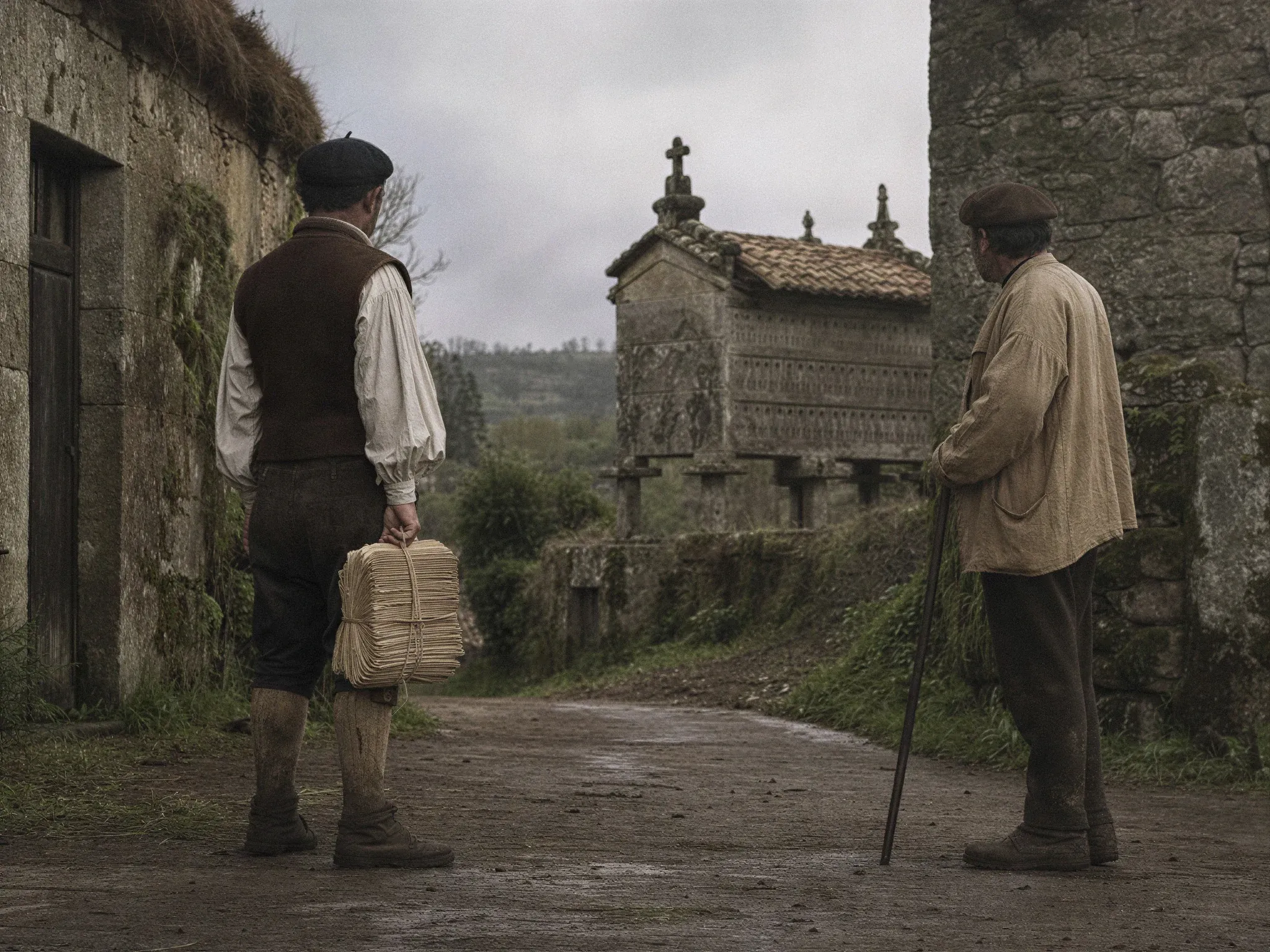
Recreation: two neighbours in a village lane, one holding a bundle of court papers, a granary behind
Neighbour against neighbour · AI recreation

by people from Nocedo are kept at the Chancery of Valladolid

Being a hidalgo — minor nobility — exempted you from the taxes commoners paid. In 1783 the commoners of the whole Ginzo jurisdiction took to court those they said were posing as hidalgos. In Nocedo, families kept litigating until 1802.

The Royal Chancery of Valladolid keeps ten lawsuits brought by Nocedo residents. In them, births, weddings and children from three centuries ago were written down.

1664-1786

The same Lorenzo

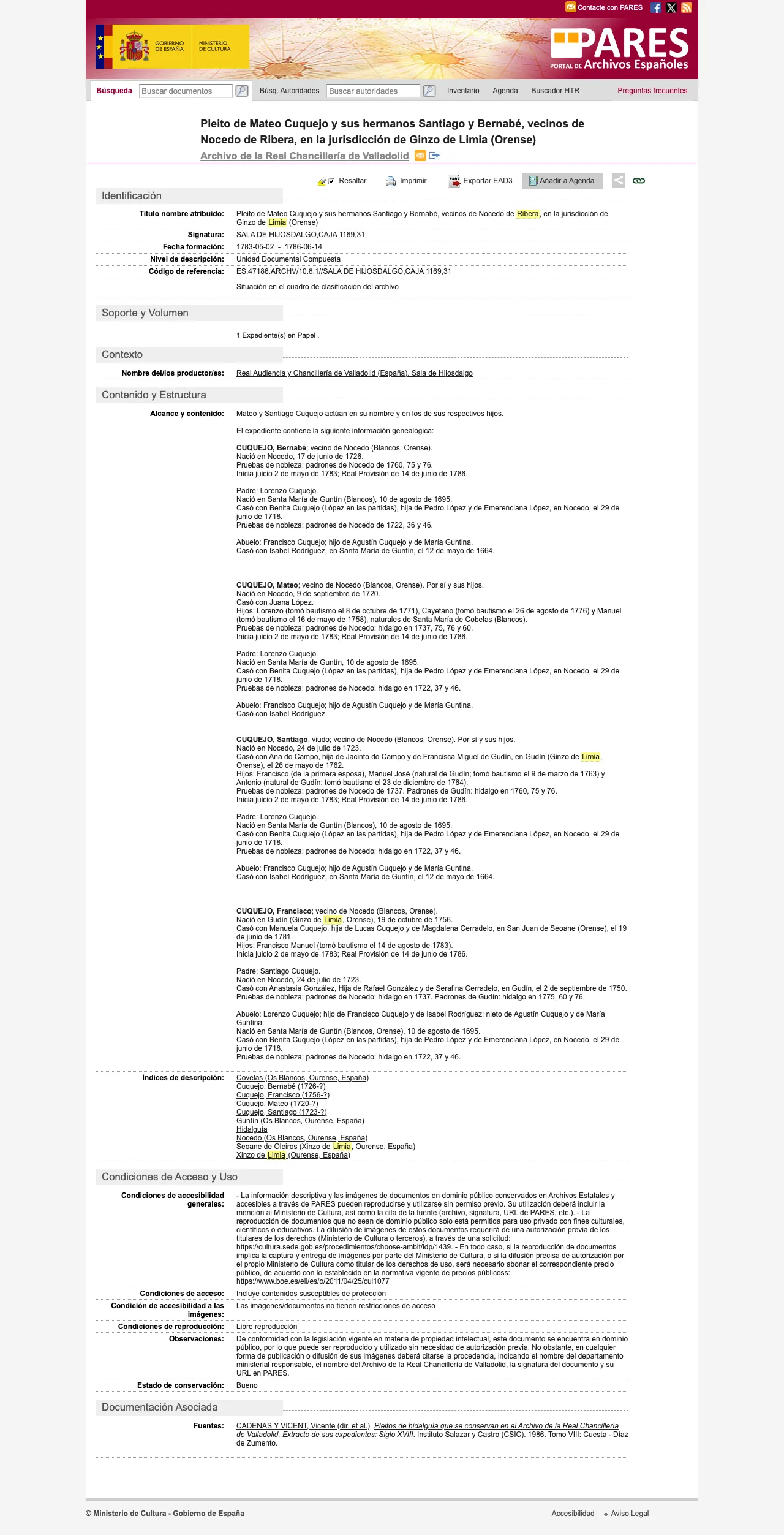
The Cuquejo brothers' file reconstructs the family. Their father, Lorenzo, is the 1752 census surveyor: two different archives, Simancas and Valladolid, speak of him.

  1. Francisco Cuquejomarries in Guntín · 12 May 1664
  2. Lorenzo Cuquejoborn in Guntín · 10 Aug 1695 · marries in Nocedo · 29 Jun 1718
  3. Mateo Cuquejoborn in Nocedo · 9 Sep 1720
  4. Santiago Cuquejoborn in Nocedo · 24 Jul 1723
  5. Bernabé Cuquejoborn in Nocedo · 17 Jun 1726

The same Lorenzo

Source Archivo de la Real Chancillería de Valladolid · Sala de Hijosdalgo · Ministerio de Cultura · PARES

SALA DE HIJOSDALGO, CAJA 1169, 31 (1783-1786)

Public domain · free to reproduce, citing archive, reference and PARES

Open in the archive

1784

Neighbour against neighbour

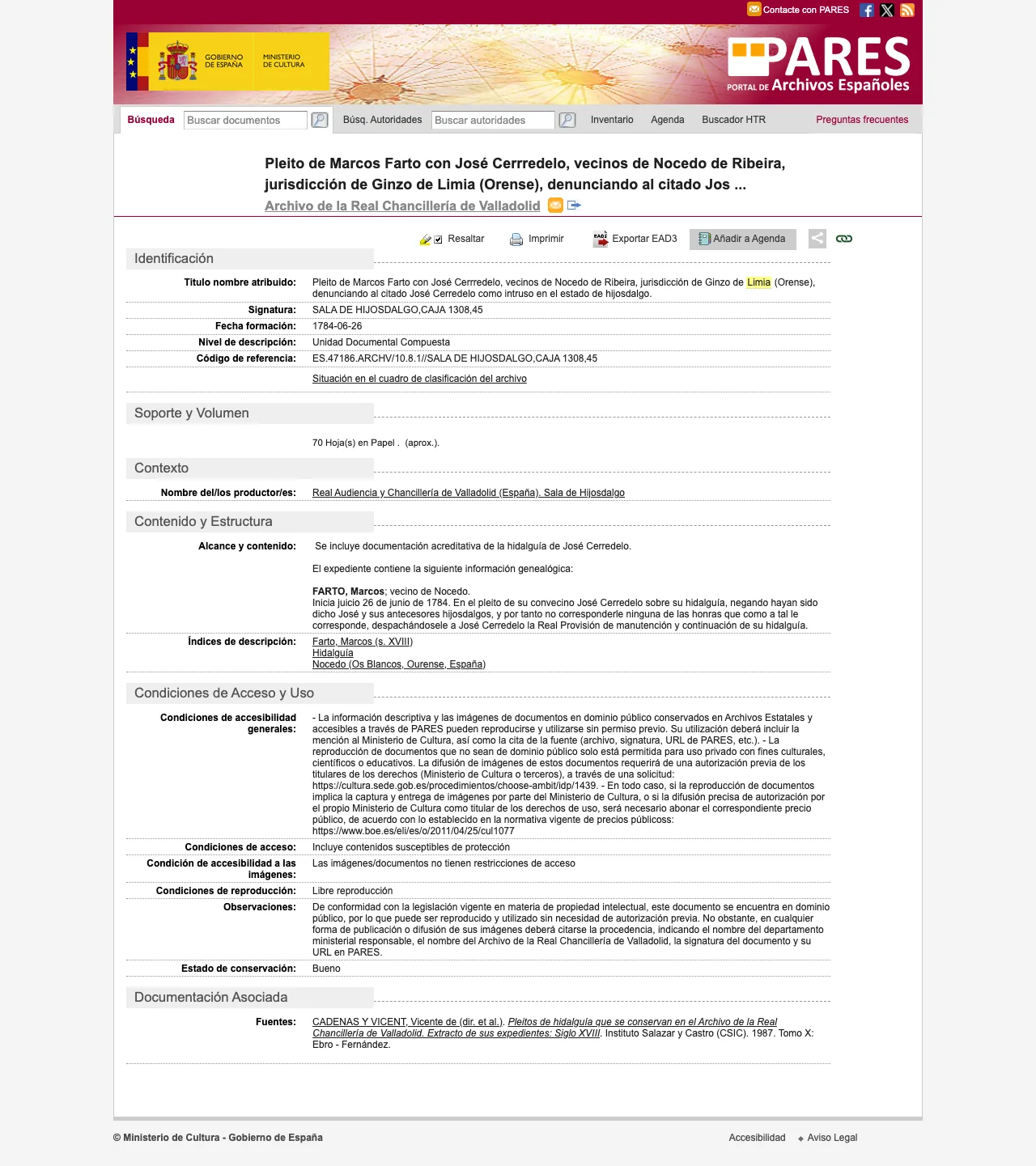
Marcos Farto of Nocedo denounces José Cerredelo as an "intruder" among the hidalgos. The file runs to some 70 sheets.

Neighbour against neighbour

«…denunciando al citado José Cerredelo como intruso en el estado de hijosdalgo.»

Source Archivo de la Real Chancillería de Valladolid · Sala de Hijosdalgo · Ministerio de Cultura · PARES

SALA DE HIJOSDALGO, CAJA 1308, 45 (1784)

Public domain · free to reproduce, citing archive, reference and PARES

Open in the archive

1783

The list for the whole district

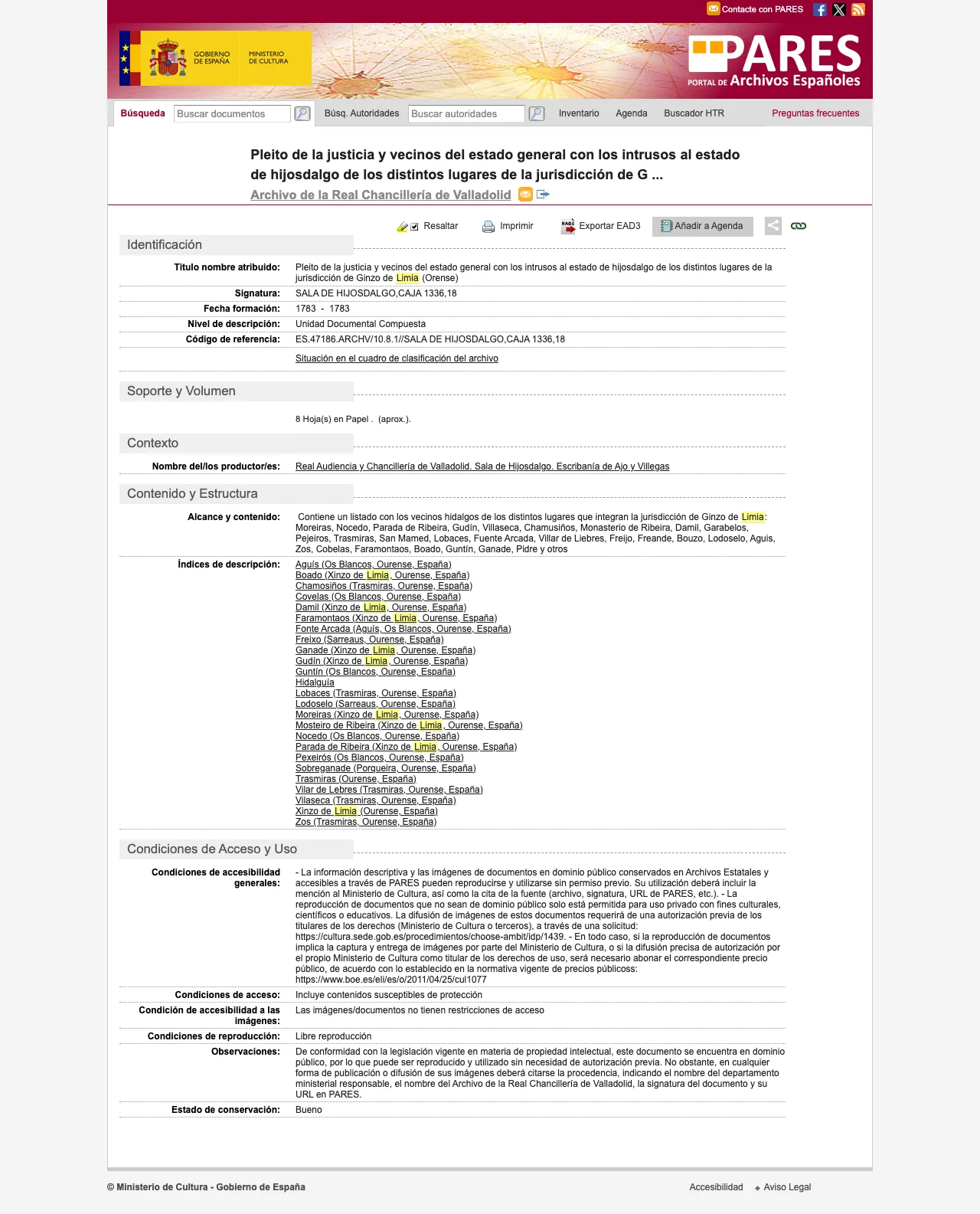
The general lawsuit of 1783 lists the hidalgos of Nocedo, Covelas, Guntín, Aguís, Mosteiro de Ribeira, Gudín, Garabelos and many more places in the Ginzo jurisdiction.

The list for the whole district

Source Archivo de la Real Chancillería de Valladolid · Sala de Hijosdalgo · Ministerio de Cultura · PARES

SALA DE HIJOSDALGO, CAJA 1336, 18 (1783)

Public domain · free to reproduce, citing archive, reference and PARES

Open in the archive

1802

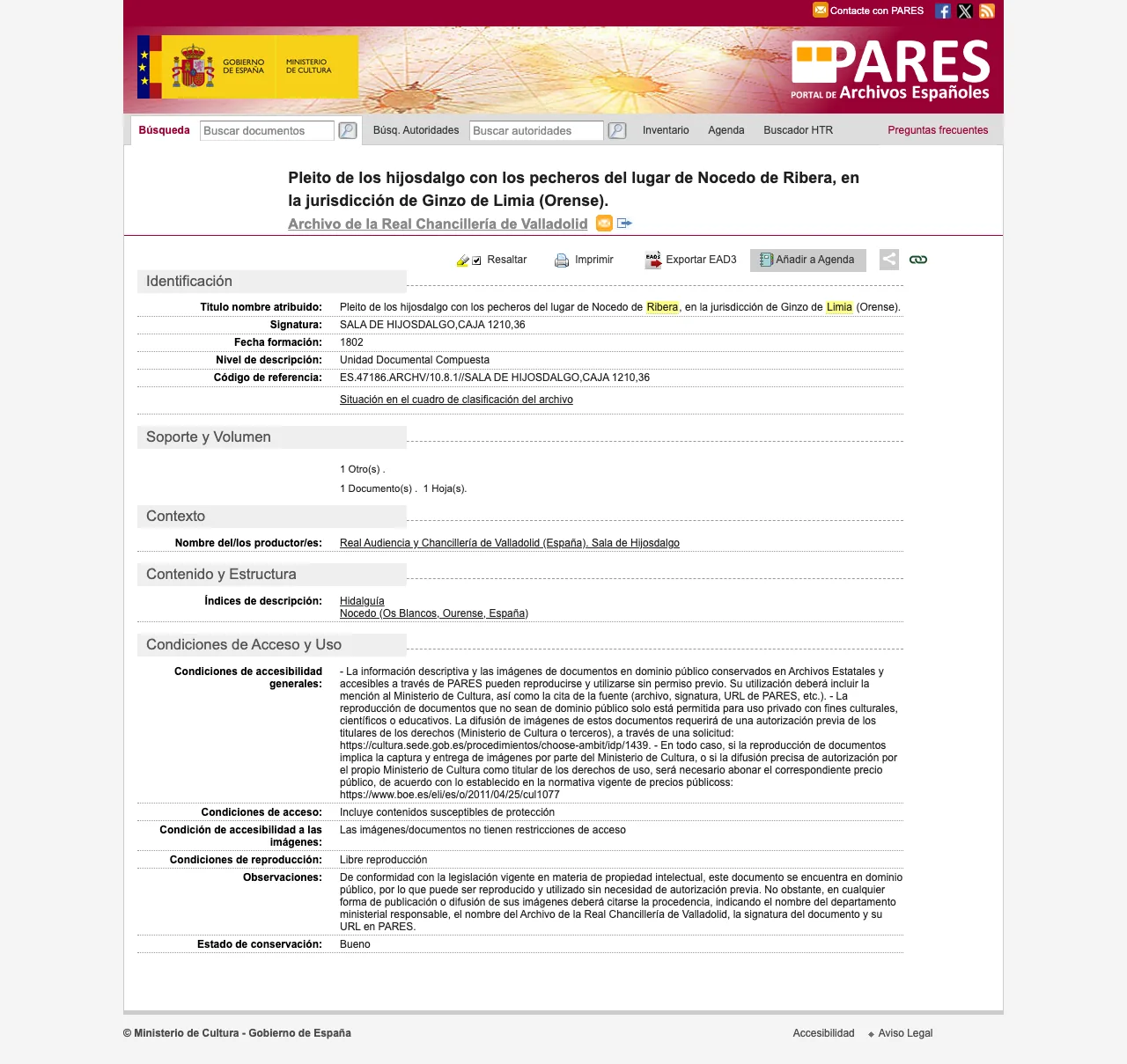
Hidalgos versus commoners

Nineteen years later, the village was still split in two.

Hidalgos versus commoners

«Pleito de los hijosdalgo con los pecheros del lugar de Nocedo de Ribera, en la jurisdicción de Ginzo de Limia.»

Source Archivo de la Real Chancillería de Valladolid · Sala de Hijosdalgo · Ministerio de Cultura · PARES

SALA DE HIJOSDALGO, CAJA 1210, 36 (1802)

Public domain · free to reproduce, citing archive, reference and PARES

Open in the archive

41 houses and good water

Forty-one houses. Two hundred and five souls. And water so good that someone wrote it down.

Recreation in the style of an early photograph: a Galician hamlet of stone houses around its church
Annexed to Covelas · AI recreation

and 205 souls

Pascual Madoz's Dictionary portrays the parish of "Nocedo de Ribeira (San Ciprián)": 41 houses, 205 souls, a healthy climate and spring water "most exquisite and wholesome". It grew grain, pulses, fruit and flax; there were cattle, pigs, sheep and goats, hunting and some fishing.

1847

Annexed to Covelas

The church depended on Santa María de Covelas, which bordered it to the north and west; on the other sides it bordered Garabelos.

Annexed to Covelas

«Tiene 41 casas […] abunda en aguas de fuente muy esquisitas y saludables […] POBL. 41 vec., 205 almas.»

Source Pascual Madoz · Diccionario geográfico-estadístico-histórico de España (1845-1850), «Nocedo de Ribeira (San Ciprián)»

Public domain

The school at Nóveas

In a room the sun never reached, children were learning to write. One of them may have been your great-grandparent.

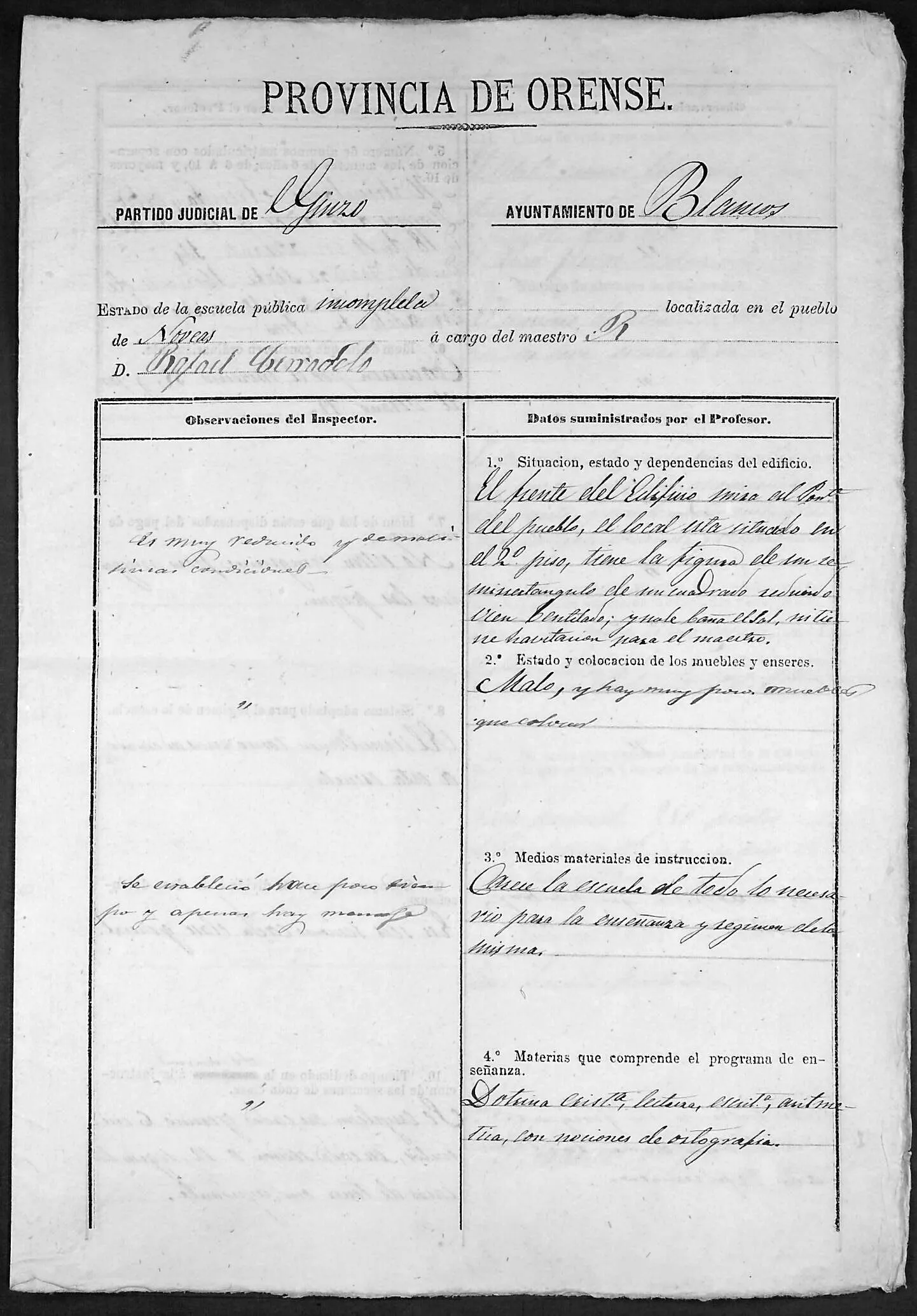
An 1878 Orense Province form about the Nóveas school, filled in by hand
"In terrible condition" · Universidade de Santiago de Compostela · Visitas de escuelas (10-04-1878) · Galiciana

An inspector visited the state school at Nóveas. The teacher, Rafael Cerradelo, described it in writing: a second floor the sun never reached, no lodging for him and hardly any furniture. He taught catechism, reading, writing, arithmetic and spelling.

1878

"In terrible condition"

The inspector noted the school had opened recently. Cerradelo: the same surname as the hidalgo denounced in 1784. Any kinship is unproven.

"In terrible condition"

«Es muy reducido y de malísimas condiciones» · «no le baña el sol, ni tiene habitación para el maestro»

Source Universidade de Santiago de Compostela · Visitas de escuelas (10-04-1878) · Galiciana

Galiciana, idBib 2239035

CC BY-NC-ND 4.0

Open in the archive

Black gold

In the sand of Nocedo's streams there is tungsten: the metal the war's arms factories were after.

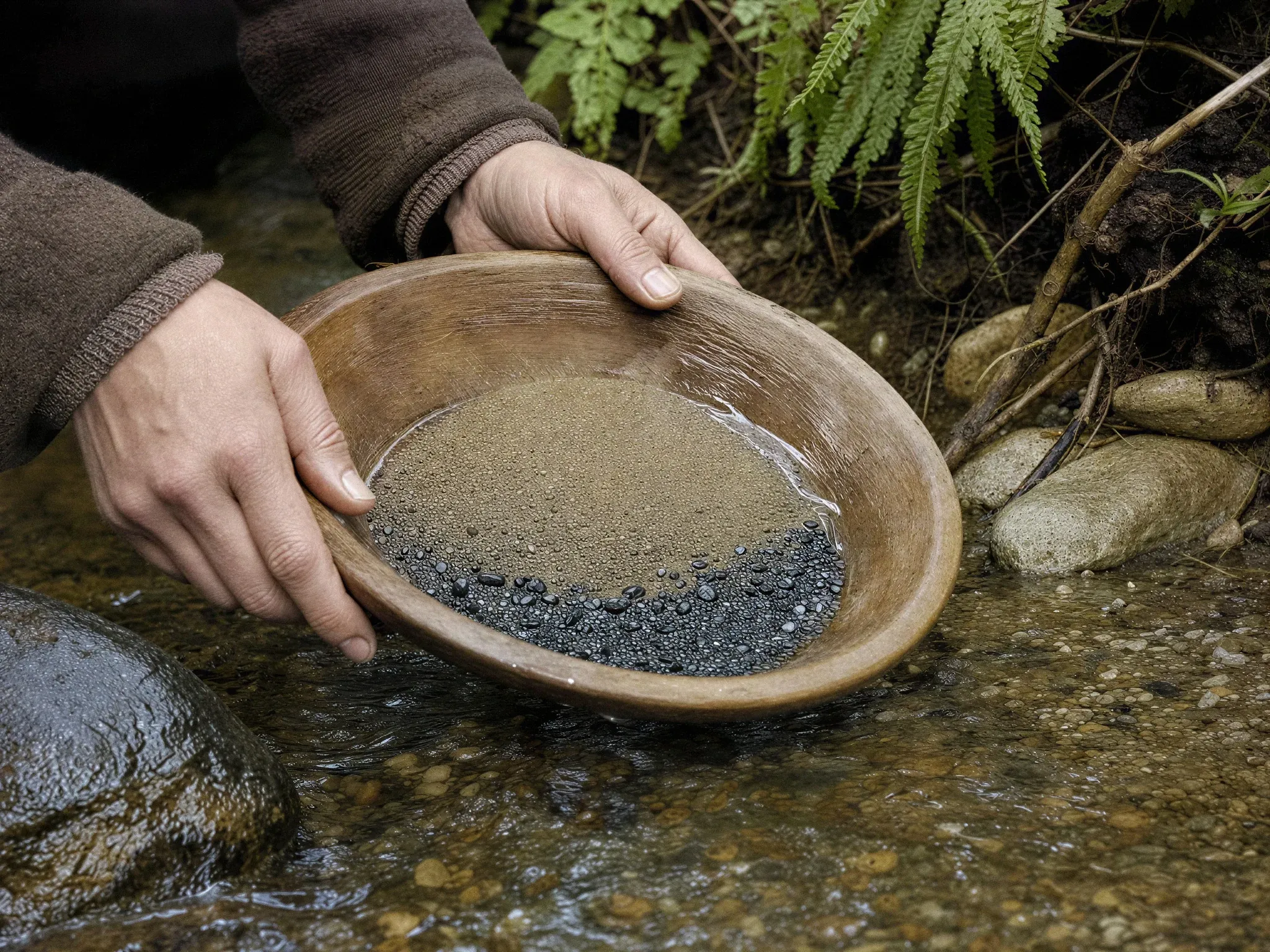
Recreation: hands panning stream sand in a wooden pan; black grains of tungsten ore settle at the bottom
Deposit 0302006 "NOCEDO" · AI recreation

died in the Fontearcada trench

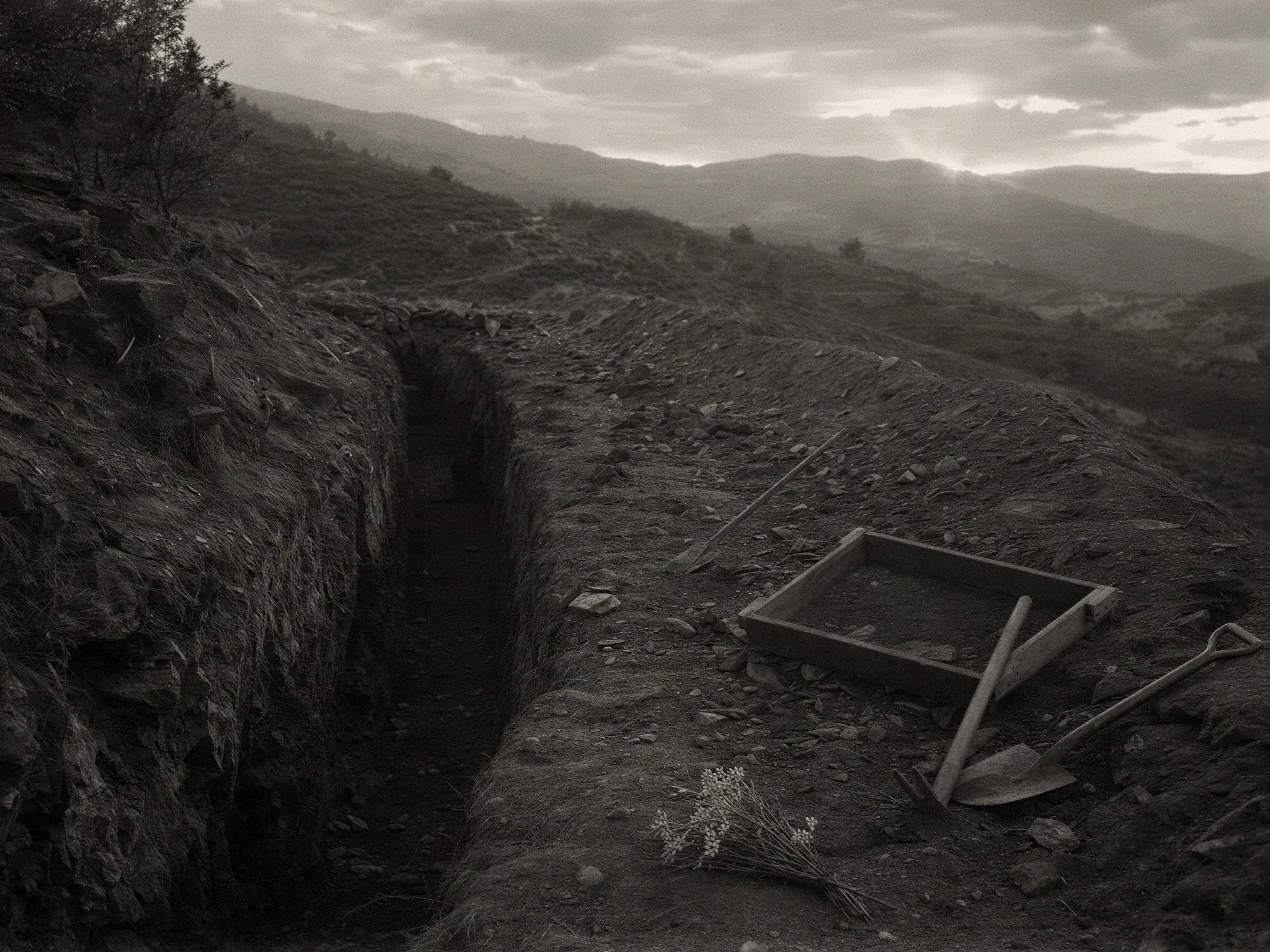
The Spanish Geological and Mining Institute records a tin and tungsten deposit in the sand of Nocedo's streams. In the same municipality, at Fontearcada, on 19 September 1941 a trench almost 20 metres deep collapsed while tungsten was being dug for the war. Thirteen people died.

IGME

Deposit 0302006 "NOCEDO"

Tin and tungsten. Alluvial: the ore lies in the sand and gravel of the streams, not in a vein. About 2 km away there is another, the "Mina Antoñita", in a vein.

Deposit 0302006 "NOCEDO"

«NOCEDO · Estaño, Wolframio · Aluvionar · Blancos, Os»

Source Origen de los datos: ©CN Instituto Geológico y Minero de España (IGME) · Base de Datos de Recursos Minerales (BDMIN)

Indicio 0302006 «NOCEDO»

Free reuse, credited to IGME

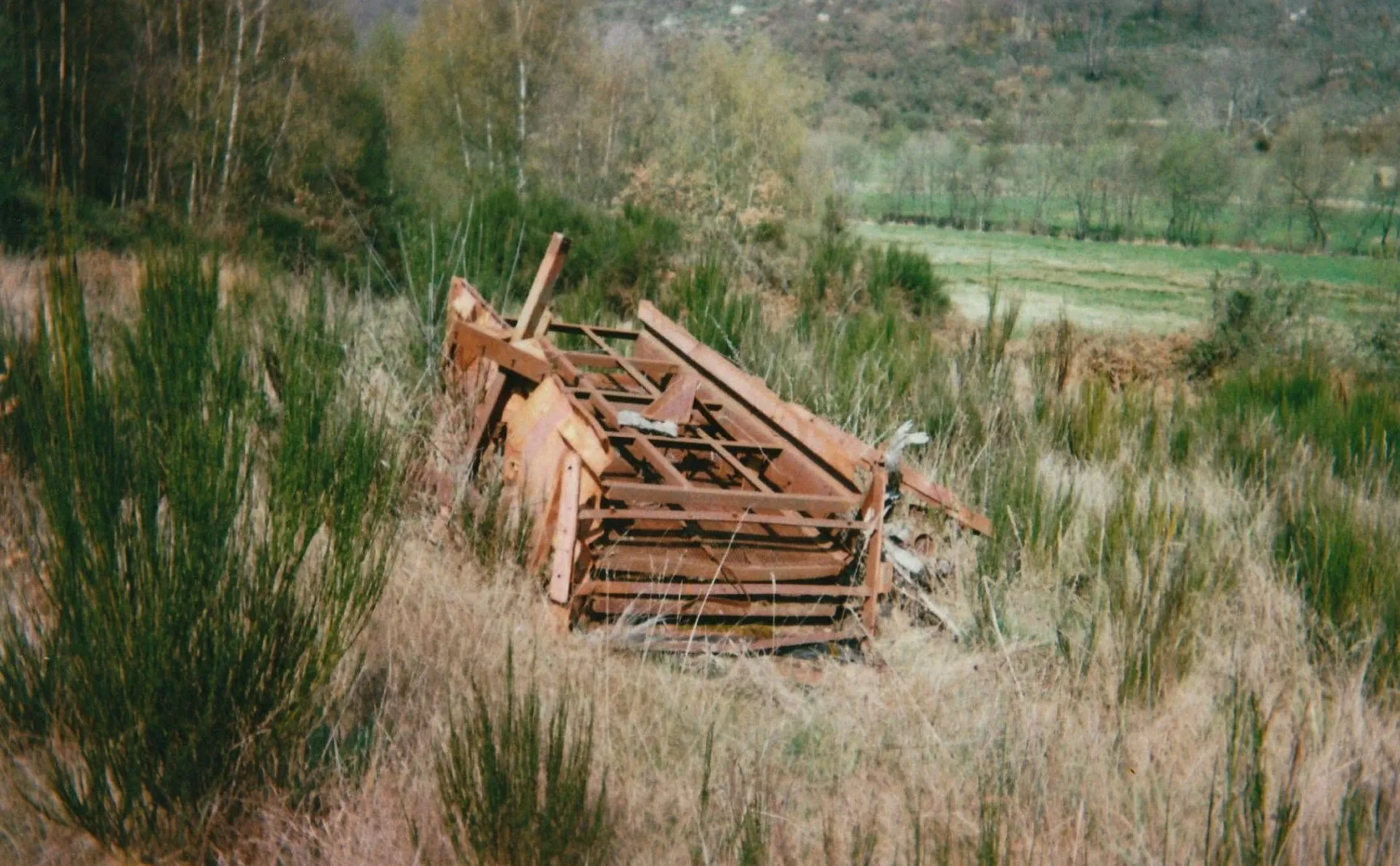
The tungsten washing machine, abandoned among the broom in Nocedo: a rusted iron frame with stacked sieves
3D reconstruction of an open-air tungsten washing site by the stream: water runs through the sieve machine and the black grains stay behind

Reconstruction: how it may have looked

19-09-1941

The "Desastre do Val"

Nine of the dead were from Fontearcada, two from Mosteiro and two from Aguís. One woman, Dolores Pena, survived.

The "Desastre do Val"

«mineral destinado a armamento de guerra»

Source La Región (Ourense) · Paula Palomanes, «La mina que truncó 13 vidas», 19-sep-2018

Quoted

The thread

No village explains itself

The documents tie Nocedo to monasteries, lordships and neighbouring villages. Every thread on this map is a document.

1 / 5

Nocedo and Nóveas: the parish of San Cibrao.

  • Nóveas · 1.6 km · 1752 · 1878Hamlet of the parish. School in 1878.

2 / 5

In 1752, seven hamlets shared one parish: Covelas, Vilarouto, Ouvigo, Mouril, Os Blancos, Nóveas and Nocedo.

  • Covelas · 1.7 km · 1752 · 1847Head of the parish in the census; Nocedo's church was annexed to it.
  • Ouvigo · 3.6 km · 1752One of the seven hamlets of the parish.
  • Mouril · 3.3 km · 1752One of the seven hamlets of the parish.
  • Os Blancos · 3.7 km · 1752One of the seven hamlets; today, the municipality.
  • Garabelos · 3 km · 1847Nocedo's neighbour, according to Madoz.

3 / 5

Lorenzo Cuquejo was born in Guntín. Jerónimo López moved to Gudín. Amaro Cuquejo came from Baltar.

  • Guntín · 3.7 km · 1695Where Lorenzo Cuquejo was born.
  • Gudín · 6.1 km · 1783Home of Jerónimo López, "native of Nocedo".
  • Seoane de Oleiros · 3.7 km · 1781Wedding of Francisco and Manuela Cuquejo.
  • Baltar · 6.7 km · 1750Where Amaro Cuquejo was born.

4 / 5

The monastery of Ribeira, six kilometres away, gave it its surname.

  • Mosteiro de Ribeira · 5.9 km · 1043The parchment's monastery: the "de Ribeira".

5 / 5

Celanova kept the parchment. Oseira taught the stonework. Monterrei ruled the land.

  • Xinzo de Limia · 8.4 km · 137 a. C. · 1752The river Limia. Seat of the jurisdiction.
  • Monterrei · 22.3 km · 1752The countess who ruled these lands.
  • Celanova · 28.4 km · 1043The monastery that received the gift.
  • Oseira · 64.2 km · c. 1220The model for the church's carvings.
  1. 1752 · 1878Nóveas · 1.6 kmHamlet of the parish. School in 1878.
  2. 1752 · 1847Covelas · 1.7 kmHead of the parish in the census; Nocedo's church was annexed to it.
  3. 1752Ouvigo · 3.6 kmOne of the seven hamlets of the parish.
  4. 1752Mouril · 3.3 kmOne of the seven hamlets of the parish.
  5. 1752Os Blancos · 3.7 kmOne of the seven hamlets; today, the municipality.
  6. 1695Guntín · 3.7 kmWhere Lorenzo Cuquejo was born.
  7. 1847Garabelos · 3 kmNocedo's neighbour, according to Madoz.
  8. 1043Mosteiro de Ribeira · 5.9 kmThe parchment's monastery: the "de Ribeira".
  9. 1783Gudín · 6.1 kmHome of Jerónimo López, "native of Nocedo".
  10. 1781Seoane de Oleiros · 3.7 kmWedding of Francisco and Manuela Cuquejo.
  11. 137 a. C. · 1752Xinzo de Limia · 8.4 kmThe river Limia. Seat of the jurisdiction.
  12. 1750Baltar · 6.7 kmWhere Amaro Cuquejo was born.
  13. 1752Monterrei · 22.3 kmThe countess who ruled these lands.
  14. 1043Celanova · 28.4 kmThe monastery that received the gift.
  15. c. 1220Oseira · 64.2 kmThe model for the church's carvings.

The same valley

Someone stole the San Vitorio stone cross. In 2017, three devotees put a new one in its place. That is how a village defends itself.

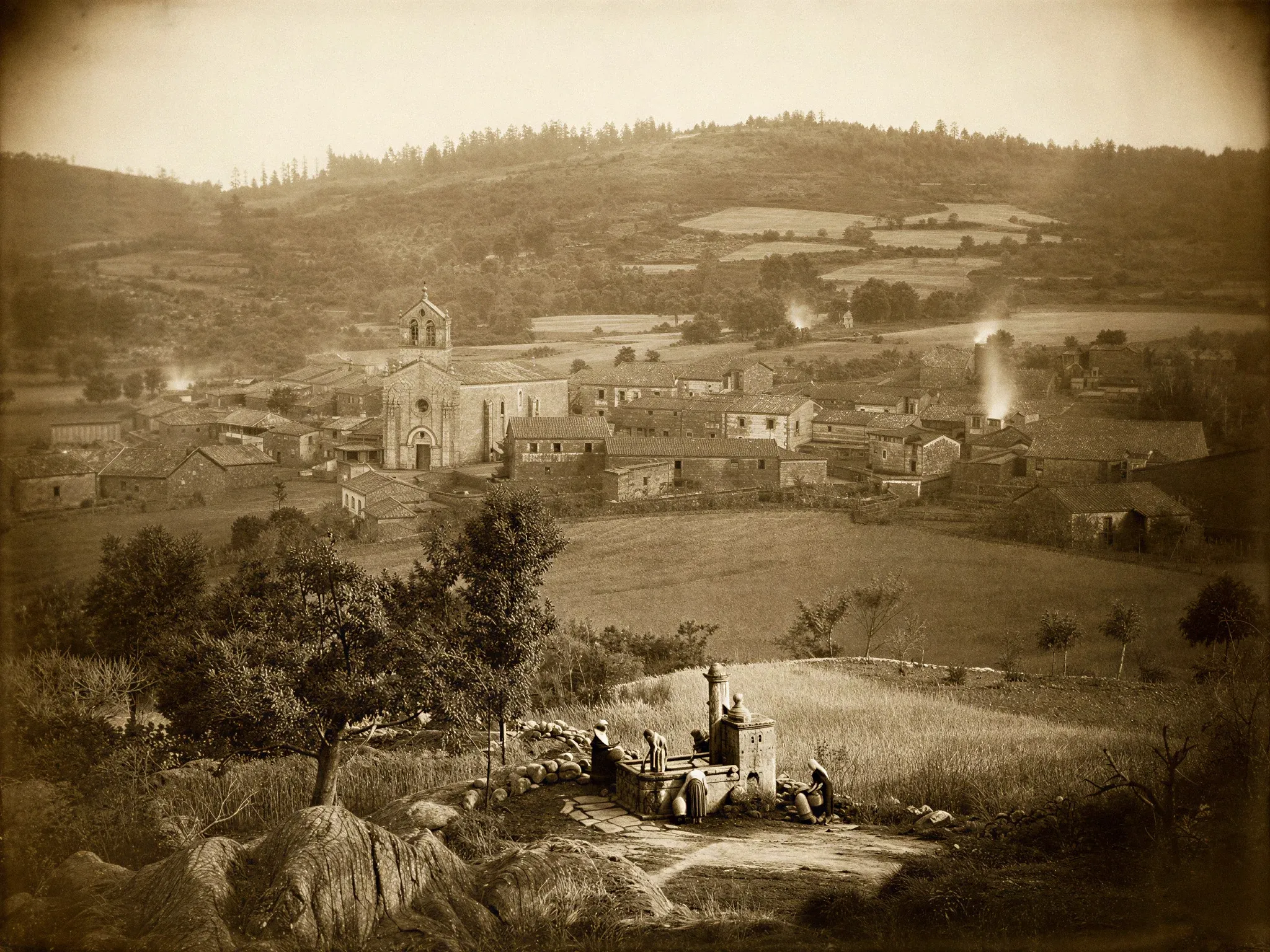
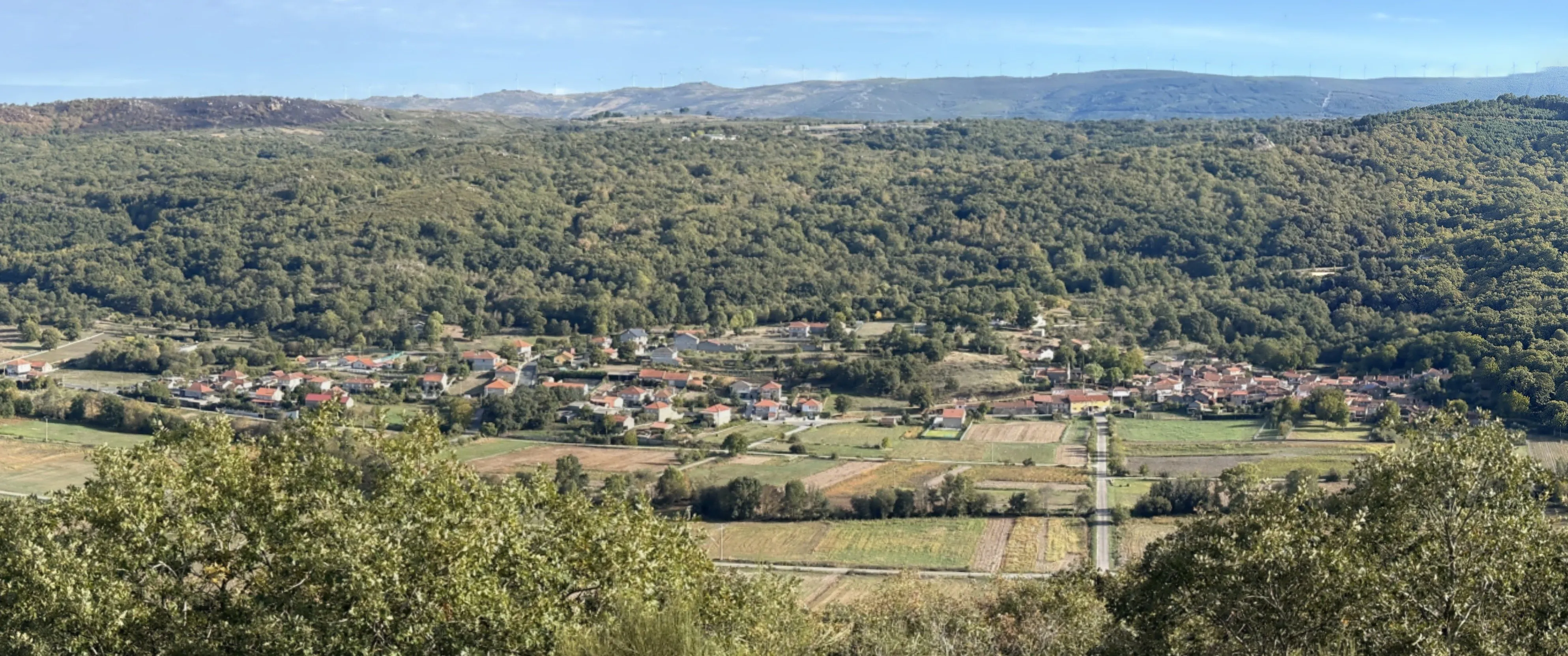
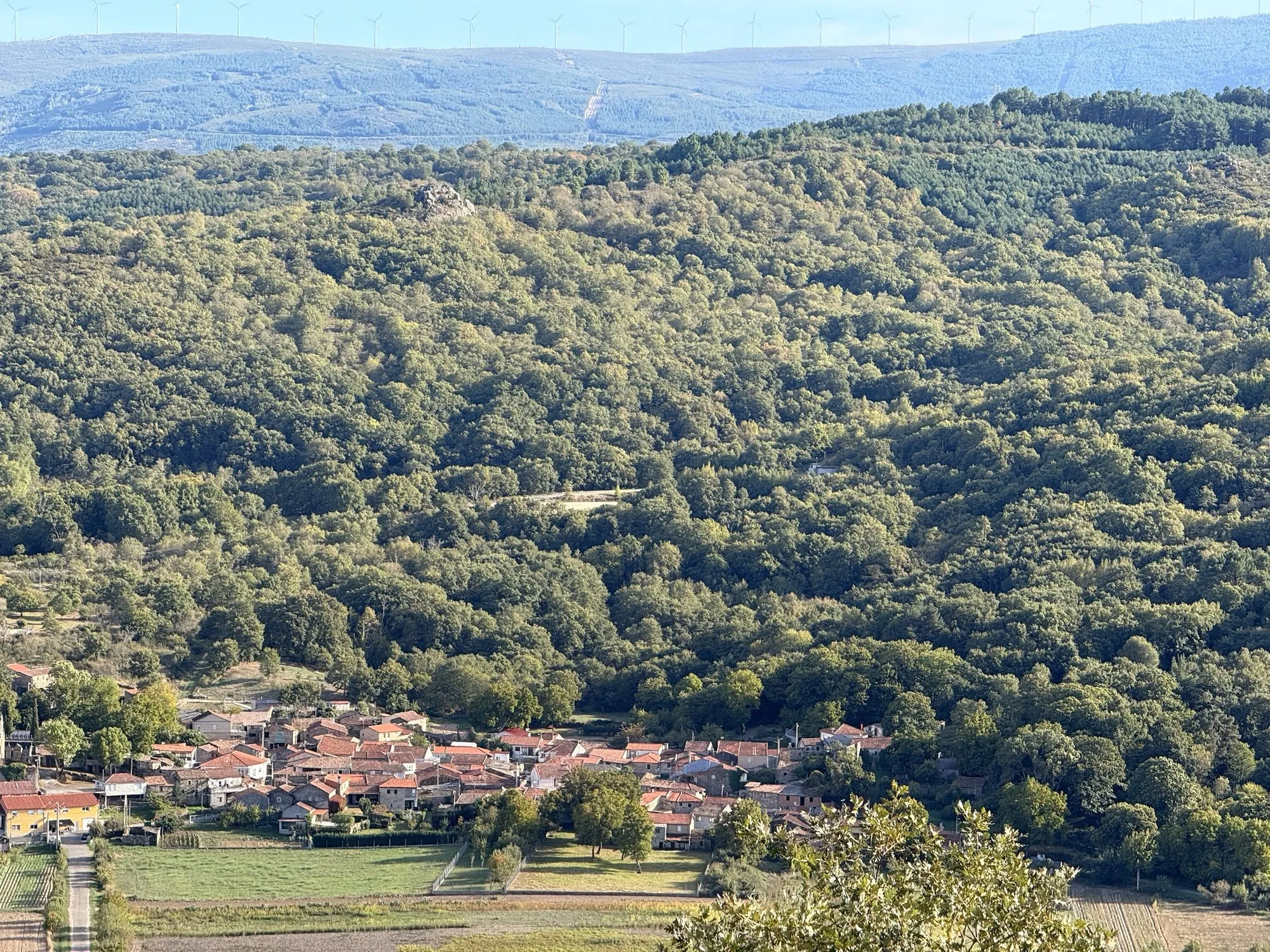
View of Nocedo: houses in the valley, green fields in front and hills behind

Nocedo and Nóveas still sit in the same Limia valley. The church still stands, the hillfort sleeps under the hill, and every August San Vitorio is carried in procession around his stone cross.

2017

The cross that came back

In August 2017 the San Vitorio stone cross, stolen a year earlier, was replaced thanks to three local devotees.

The cross that came back

2026

From the hill

The village in the distance, at the edge of the plain.

From the hill

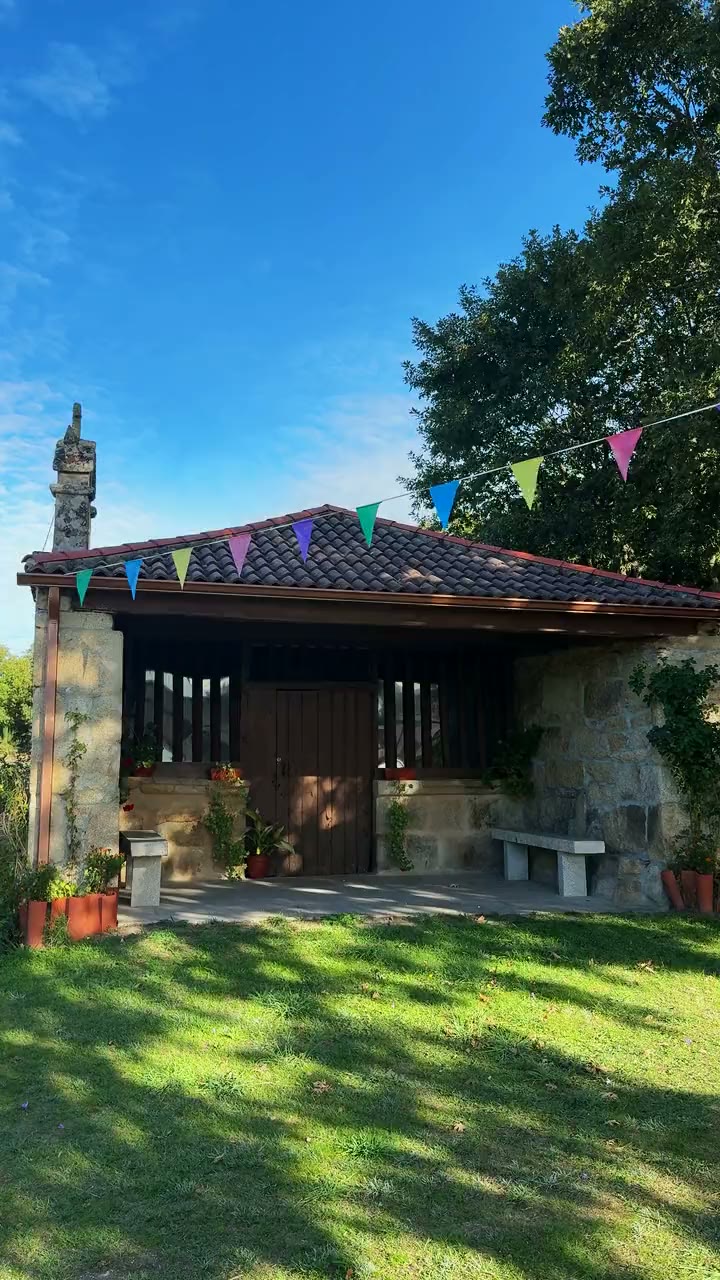
The chapel of Our Lady of the Assumption at As Fontelas with its festival bunting, its stone cross under an oak and the spring at the foot of a mossy rock

In 1999 there were 228. Today, 112: half

0501001502002501847200020052010201520202025Parish residentsYear1847: 205 · Madoz205 · 18471999: 228 · IGE228 · 19992000: 224 · IGE2001: 208 · IGE2002: 210 · IGE2003: 203 · IGE2004: 198 · IGE2005: 181 · IGE2006: 183 · IGE2007: 183 · IGE2008: 169 · IGE2009: 162 · IGE2010: 157 · IGE2011: 169 · IGE2012: 157 · IGE2013: 146 · IGE2014: 146 · IGE2015: 143 · IGE2016: 136 · IGE2017: 129 · IGE2018: 132 · IGE2019: 128 · IGE2020: 125 · IGE2021: 121 · IGE2022: 111 · IGE2023: 110 · IGE2024: 110 · IGE2025: 112 · IGE112 · 2025050100150200250184720002025Parish residentsYear1847: 205 · Madoz205 · 18471999: 228 · IGE228 · 19992000: 224 · IGE2001: 208 · IGE2002: 210 · IGE2003: 203 · IGE2004: 198 · IGE2005: 181 · IGE2006: 183 · IGE2007: 183 · IGE2008: 169 · IGE2009: 162 · IGE2010: 157 · IGE2011: 169 · IGE2012: 157 · IGE2013: 146 · IGE2014: 146 · IGE2015: 143 · IGE2016: 136 · IGE2017: 129 · IGE2018: 132 · IGE2019: 128 · IGE2020: 125 · IGE2021: 121 · IGE2022: 111 · IGE2023: 110 · IGE2024: 110 · IGE2025: 112 · IGE112 · 2025

1847: Madoz ("souls" of the San Ciprián parish; its hamlets may not match today's). 1999-2025: Galician Statistics Institute, register at 1 January (Nocedo and Nóveas). There are no parish figures between 1847 and 1999: that stretch is dotted.

The names

Find your surname

If your surname is here, part of you was already in Nocedo before you were born.

These surnames appear in the documents. Tap one to see where.

Not there? Your memory could be the first record to name it. Share a memory

Edition 02

You write the next edition

The archives stop in 1878. The rest is kept by you: in a shoebox, in a wedding photo, in a grandmother's memory.

A photo of your grandparents' wedding, a house nickname, who left for Buenos Aires or Switzerland, a festival, a trade. Everything you remember about Nocedo and Nóveas helps keep it from being forgotten.

Step 1 of 5

It will appear under your memory. A first name is enough.

The memory wall

No memories yet. The first one could be yours.

Come

Come to Nocedo

It is 50 kilometres from Ourense. From Xinzo de Limia, take the road south towards Baltar.

  • The church of San CibraoRomanesque, around 1220
  • The valley from the hillWhere the hillfort stood
  • San VitorioFestival and procession in August
Get directions

A village does not die when its people leave. It dies when no one says its name.

Explore it yourself

Nocedo as a 3D model built from real data: move around it, watch day turn into night and travel through time.

Enter the model

Open in the archive ↗